AI Automation Workflows for Service Businesses: What to Automate First
A practical guide to choosing the first AI automation workflows for a service business, with examples for leads, follow-up, reviews, quoting, and admin.
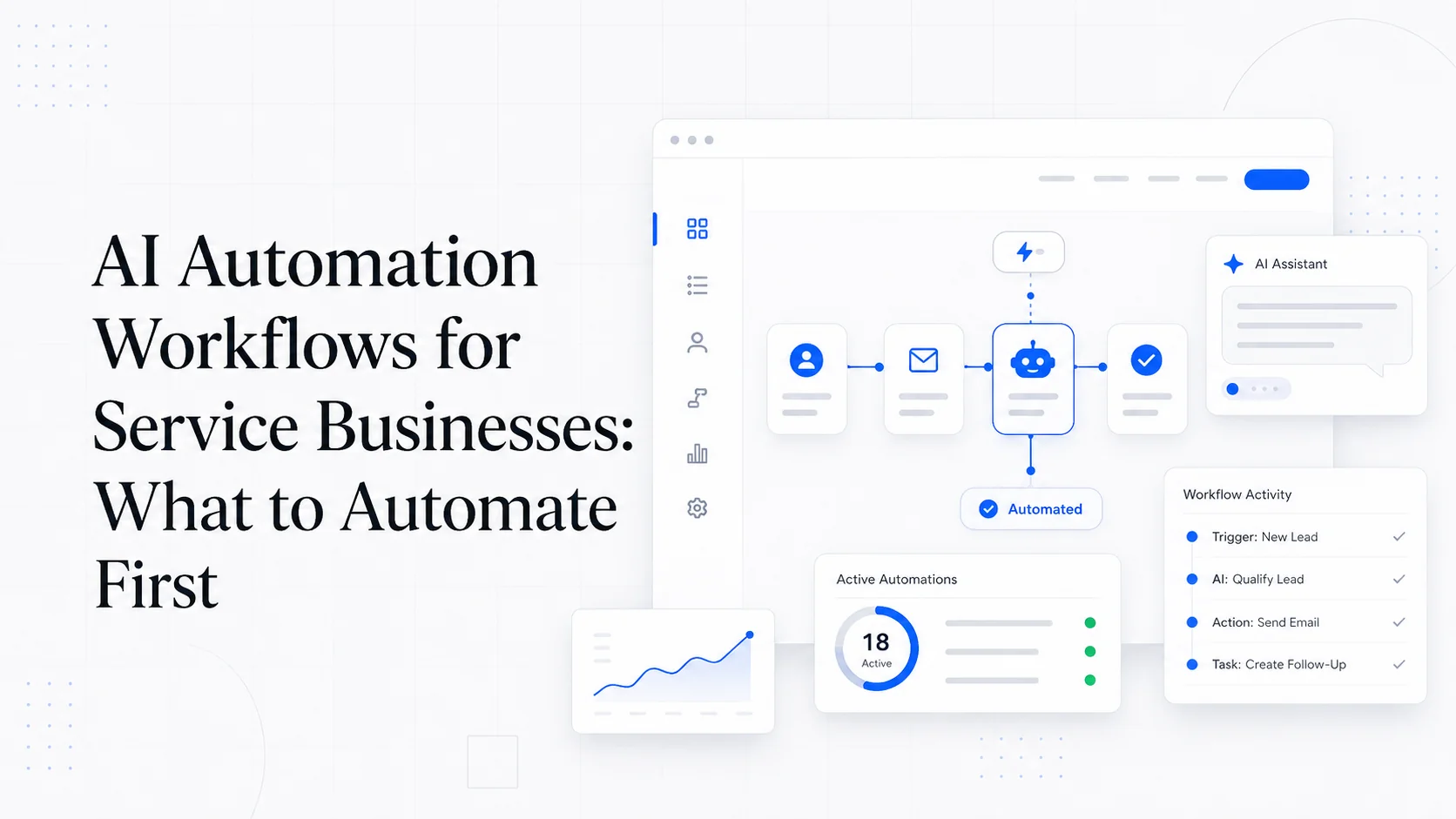
AI automation is most useful when it removes a repeated delay from the business. It is least useful when it starts as a vague goal like "use AI more."
For service businesses, the best first workflows are usually close to revenue:
- Capturing new leads.
- Responding faster.
- Qualifying requests.
- Following up on quotes.
- Asking for reviews.
- Summarizing calls or emails.
- Moving data between tools.
- Reminding staff when something is stuck.
These workflows are not flashy, but they are valuable. They reduce missed opportunities and give the team more time to do the work clients are paying for.
What AI Automation Actually Means
Automation means a workflow runs without someone manually pushing every step.
AI adds value when the workflow includes messy information:
- A long email needs to be summarized.
- A lead message needs to be classified.
- A phone transcript needs action items.
- A form response needs a suggested reply.
- A support request needs a priority level.
- A document needs key details extracted.
Traditional automation is good at "if this, then that." AI is useful when "this" is unstructured.
For example:
- Trigger: A website form is submitted.
- AI step: Summarize the request and classify the service type.
- Automation step: Create a CRM lead, notify the team, and send a tailored confirmation email.
That is a realistic first workflow. It does not replace the business. It cleans up the handoff.
Start With Repetitive, Revenue-Adjacent Work
The first automation should meet three tests:
- It happens often.
- It has a clear owner.
- It affects leads, revenue, customer experience, or staff time.
Avoid automating a broken process. If nobody agrees what should happen after a quote is sent, AI will not fix that. Write the workflow manually first, then automate the stable parts.
Workflow 1: Lead Intake and Routing
Most small service businesses leak leads because intake is scattered.
Leads may arrive from:
- Website forms.
- Email.
- Phone calls.
- Social messages.
- Google Business Profile.
- Referrals.
- Old clients texting directly.
The automation goal is to collect the right details and move each lead to the right place.
A useful lead intake workflow can:
- Capture the form submission.
- Use AI to summarize the request.
- Classify the service type.
- Estimate urgency based on words like "today," "emergency," or "deadline."
- Create a CRM record.
- Assign the lead to the right person.
- Send a confirmation email.
- Notify the team in Slack, email, or the admin dashboard.
The confirmation email should not pretend to be human if it is automated. Keep it clear:
"We received your request. A real person will review it and reply within one business day. If this is urgent, call this number."
That gives the customer confidence and gives your team structure.
Workflow 2: Smart Quote Follow-Up
Many businesses send quotes and then rely on memory.
A quote follow-up workflow can:
- Detect when a quote is sent.
- Wait a set number of days.
- Check whether the quote was approved, rejected, paid, or ignored.
- Send a helpful follow-up.
- Alert staff if the deal is high value.
- Create a task for manual outreach if needed.
AI can help tailor the follow-up based on the quote type:
- Maintenance plan.
- Website redesign.
- One-time project.
- Monthly service.
- Emergency repair.
The message should be useful, not pushy. A good follow-up might answer the most common objection:
"If you are comparing options, the most important difference is usually scope. This quote includes planning, development, QA, launch support, and post-launch fixes."
That is better than "just checking in."
Workflow 3: Review Requests After Completed Work
Reviews are one of the highest-value automations for local and service businesses.
The workflow is simple:
- Trigger: Project or job marked complete.
- Wait: 1 to 3 days.
- Send: A review request with the correct Google review link.
- Follow-up: One reminder if no review is left.
- Notify: Team if the customer responds with an issue instead of a review.
AI can help personalize the request using project details:
- "Thanks for trusting us with the landing page launch."
- "Thanks for having us handle the repair."
- "Thanks for working with us on the client portal build."
Do not overdo it. The best review request is short, specific, and easy to act on.
Workflow 4: Email and Call Summaries
Service businesses often lose time translating conversations into tasks.
An AI summary workflow can:
- Take a call transcript or long email.
- Extract key details.
- Identify requested actions.
- Identify deadlines.
- Draft a reply.
- Create internal tasks.
- Store the summary on the client record.
This is useful for sales calls, project calls, support emails, and onboarding conversations.
The important rule: AI can draft and summarize, but a human should review anything that goes to a client when money, scope, legal terms, or sensitive details are involved.
Workflow 5: Website Form Enrichment
Most contact forms collect too little information or too much irrelevant information.
AI can help turn plain form submissions into more useful internal records.
Example:
- Customer writes: "Need help fixing our site. It is slow and we are not getting leads."
- AI summary: "Potential website redesign or performance/SEO project. Pain points: slow site, low lead volume. Likely needs audit."
- Suggested next step: "Send website audit booking link."
The automation can then:
- Tag the lead as "website audit."
- Send a relevant reply.
- Create a task to review the site.
- Add the lead to the right pipeline stage.
This is better than dumping every form submission into the same inbox.
Workflow 6: Internal Admin Cleanup
Some of the best automations are invisible to customers.
Examples:
- Create a folder when a project is approved.
- Generate a project checklist from the sold service.
- Create invoice draft after quote approval.
- Move uploaded files into the right storage location.
- Remind staff when a client has not sent required assets.
- Summarize weekly open projects.
- Flag stale leads.
- Send a daily digest of urgent tasks.
These workflows reduce the "someone has to remember" burden.
What Not to Automate First
Do not start with the highest-risk workflow.
Avoid making AI fully responsible for:
- Pricing.
- Legal decisions.
- Refund decisions.
- Sensitive client communication.
- Final proposal language.
- Anything that could damage trust if wrong.
Start with assistive automation: drafts, summaries, routing, reminders, and internal tasks. Once the team trusts the system, expand carefully.
A Simple Automation Scorecard
Use this scorecard to choose your first workflow.
Score each idea from 1 to 5:
- Frequency: How often does it happen?
- Time saved: How much manual work does it remove?
- Revenue impact: Does it help win, retain, or collect revenue?
- Risk: How bad is it if the automation gets it wrong?
- Clarity: Is the current process already well understood?
Pick a workflow with high frequency, high time saved, clear steps, and low risk.
For many service businesses, the winner is lead intake or quote follow-up.
Tools Matter Less Than the Workflow
You can build automations with many tools: Zapier, Make, n8n, custom code, Supabase, HubSpot, Airtable, Stripe, Google Workspace, Slack, and AI APIs.
The tool stack matters, but the workflow matters more.
Before choosing tools, define:
- What starts the workflow?
- What data is needed?
- What system owns the data?
- What should AI decide?
- What should a human approve?
- What should happen if AI is uncertain?
- Where should logs and errors go?
That last question matters. If an automation fails silently, it creates a new problem.
How to Launch Your First AI Automation
Use a staged rollout:
- Document the manual workflow.
- Build the smallest automated version.
- Run it internally first.
- Log every output.
- Review mistakes.
- Add human approval where needed.
- Turn it on for real work.
- Measure time saved, response speed, and conversion impact.
Do not judge the workflow by whether it feels impressive. Judge it by whether leads get answered faster, quotes get followed up, reviews increase, and staff spend less time copying information between tools.
Final Takeaway
The best AI automation workflows for service businesses are practical. They live close to the customer journey and remove repeated delays.
Start with lead intake, quote follow-up, review requests, summaries, or internal admin cleanup. Keep humans in control of judgment-heavy steps. Make the first workflow small enough to trust, then improve it.
Sites That Grow builds AI automation and custom software for service businesses that need cleaner operations without adding another messy tool. The right automation should feel like a calmer version of your existing process, not a science project.
More posts from the blog.
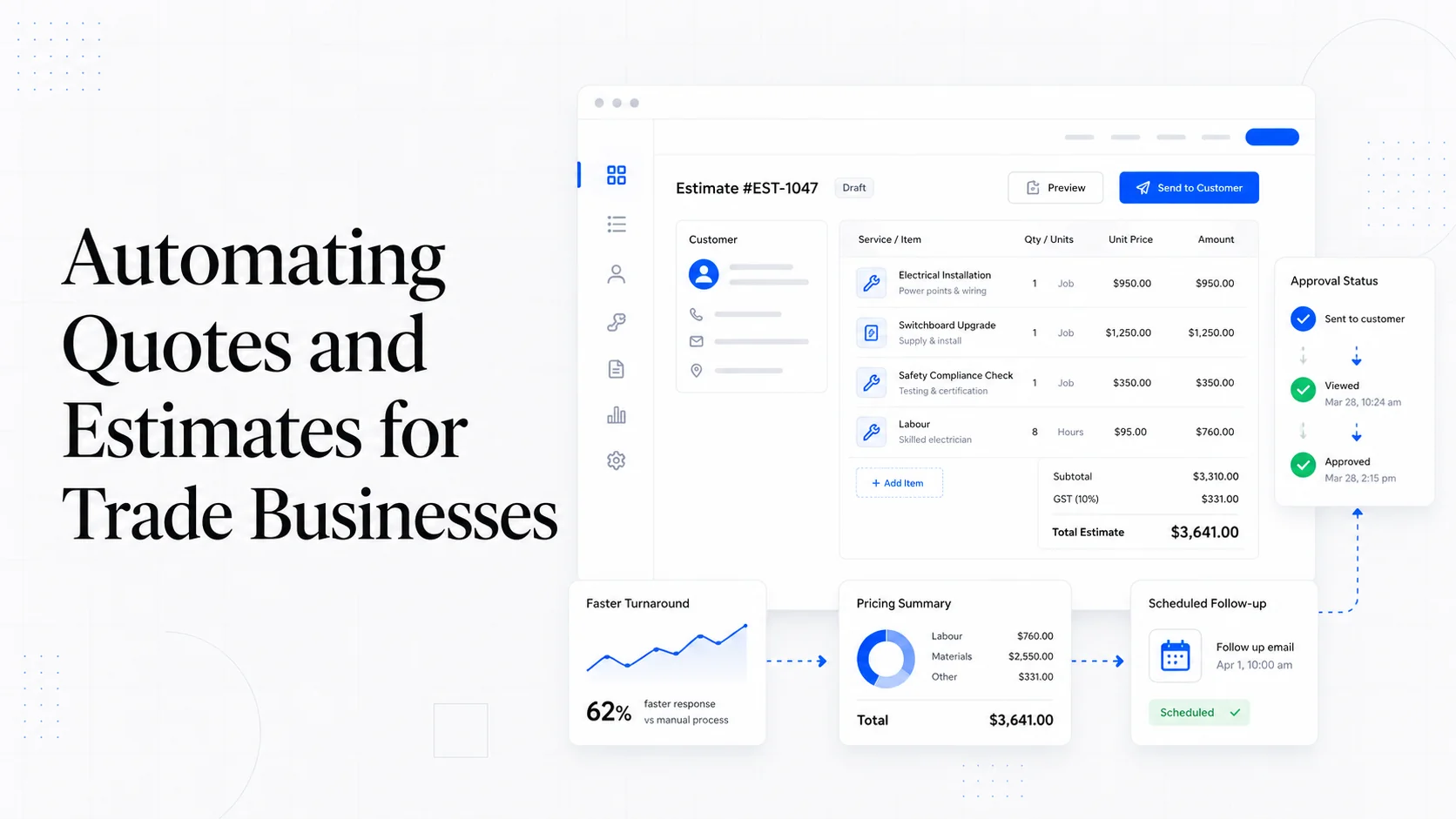
From Contact Form to CRM: The Minimum Lead Pipeline Every Service Business Should Automate
A practical lead pipeline for service businesses: connect forms, calls, email, CRM records, reminders, follow-ups, and reporting so good leads stop disappearing.
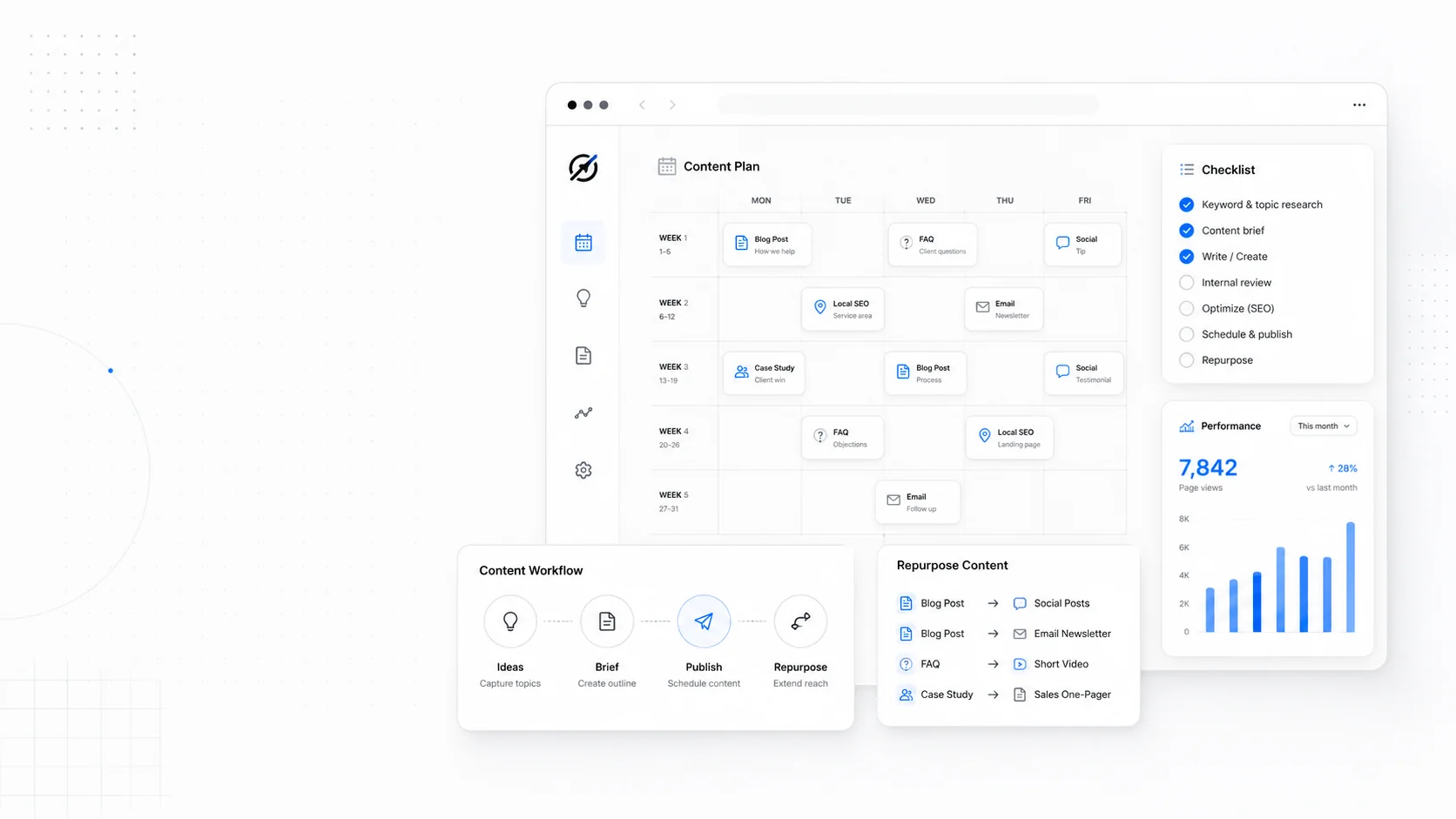
The 2026 Website Content Refresh Playbook: Updating Old Pages Without Breaking SEO
A practical content refresh process for small business websites: how to update stale pages, preserve rankings, improve AI search visibility, and avoid SEO mistakes.
The AI Chat Widget Decision: When It Helps Leads and When It Hurts Trust
AI chat widgets can qualify leads and answer common questions, but they can also slow the site, invent answers, mishandle privacy, and damage trust. Here is how to decide.
Keep reading?
More field notes from building modern websites and software for real businesses.