
Reviews Are Becoming AI Search Fuel: How to Build a Trust Profile Machines Can Understand
Reviews, testimonials, case studies, third-party profiles, and structured data now shape how both people and AI search systems evaluate service businesses.
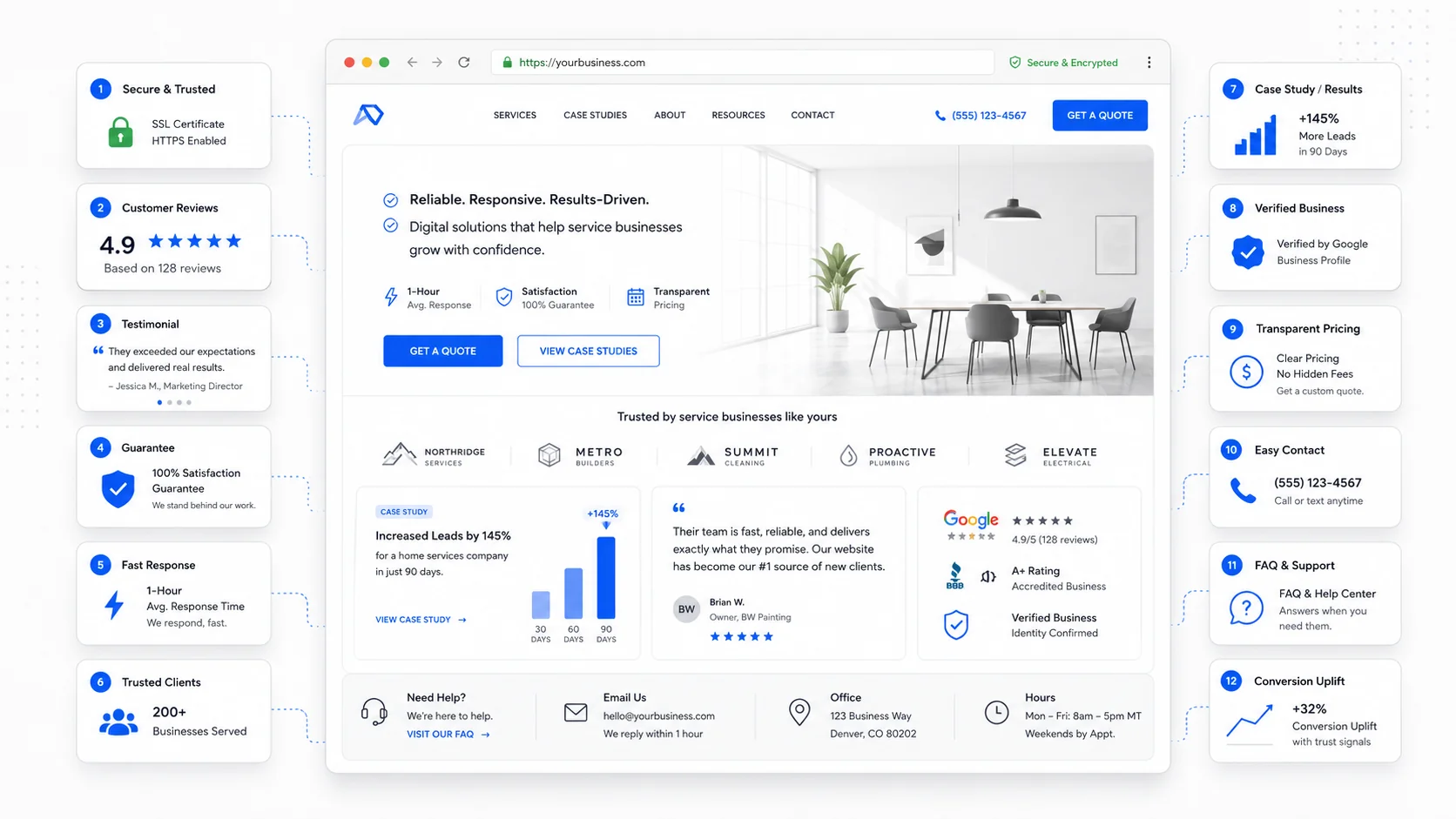
Reviews used to be treated like decoration. Add a few five-star quotes to the homepage, maybe embed a Google review widget, and move on.
That is no longer enough.
Reviews are becoming part of a broader trust profile. Human buyers use them to decide whether a business feels safe. Search engines use public business details, local listings, structured data, and reputation signals to understand the entity. AI search systems summarize and compare businesses using the same messy public web that customers use.
The lesson is simple: your reputation needs to be visible, specific, current, and consistent across the places machines and people look.
Reviews Are Not Just Stars
A five-star average is helpful, but it is not the whole story.
When a buyer reads reviews, they are usually looking for answers:
- Did the business show up on time?
- Did they communicate clearly?
- Did the price match expectations?
- Did they solve the problem?
- Did they handle mistakes well?
- Are customers like me happy?
- Is this business real and active?
AI search systems are also looking for patterns. A pile of generic reviews that say "great service" is less informative than specific reviews that mention the service, location, problem, process, and outcome.
For example:
"Great company, highly recommend."
That is nice, but thin.
"They rebuilt our WordPress site for a moving company in Richmond, kept our old URLs intact, and fixed the contact forms that had stopped sending leads."
That is useful. It names the service, industry, location, constraint, and outcome.
You cannot force customers to write that way, and you should never script fake reviews. But you can ask better prompts after a real project:
- What problem were you trying to solve?
- What service did we help with?
- What changed after the work was done?
- What would you tell another business owner considering this?
Those prompts produce better human reviews because they help customers remember the story.
Build a Review System, Not a Review Wish
Most businesses say they want more reviews. Few have a review system.
A review system includes:
- A trigger: when the request gets sent.
- A sender: who asks.
- A channel: email, SMS, invoice note, or follow-up call.
- A destination: Google, industry platform, or testimonial form.
- A fallback: what happens if the customer does not respond.
- A response plan: how the business replies to reviews.
The best trigger is usually after the customer has experienced the outcome, not the moment the invoice is paid. For a website project, that might be two weeks after launch. For a home service job, it might be the day after the work is complete. For a consulting engagement, it might be after the first measurable win.
The message should be short:
"Would you be willing to leave a short review about the work we did? It helps other business owners understand what to expect. If it helps, mention the problem you came in with and what changed after the project."
Do not offer compensation for positive reviews. Do not pressure customers. Do not write reviews on their behalf. The Federal Trade Commission's rule on reviews and testimonials gives businesses plenty of reasons to keep this clean, and common sense gives you the rest. Fake trust is a liability.
Put Reviews in Context on Your Website
Embedding a review widget is fine, but context is better.
A review on a homepage says "people like us." A review on a service page says "people bought this service and got this result."
Place testimonials where they support a decision:
- A website redesign review on the redesign page.
- A maintenance review on the care plan page.
- A CRM automation review on the automation page.
- A local customer review on a service-area page.
- A complex project quote inside a case study.
This helps humans and machines connect the proof to the claim.
If you say you build client portals, show a testimonial from a client portal project. If you say you serve contractors, show proof from a contractor. If you say you reduce admin time, show the before-and-after.
The trust signal should answer the buyer's unspoken question: "Have you solved a problem like mine?"
Use Case Studies as Long-Form Reviews
Reviews are short. Case studies are where the trust profile gets depth.
A strong case study explains:
- The client type.
- The starting problem.
- The constraints.
- The options considered.
- The work performed.
- The outcome.
- What changed after launch.
That gives search systems more substance than a testimonial alone. It also gives buyers a reason to believe you understand tradeoffs.
A weak case study says:
"We helped Company X modernize their website with a beautiful design and improved user experience."
A useful case study says:
"Mathis Moving needed a faster site, clearer quote flow, and fewer missed form submissions. We rebuilt the site, preserved the highest-value URLs, added phone-first CTAs, and connected quote requests to the owner's inbox and tracking sheet. The result was a site that loaded faster on mobile and made it easier for visitors to request an estimate."
That is not just marketing. It is evidence.
Keep Third-Party Profiles Clean
Your website is only one part of your trust profile.
Review and directory platforms often show up in search and AI summaries. Depending on the business, that may include:
- Google Business Profile.
- Yelp.
- Facebook.
- Clutch.
- Angi.
- Houzz.
- Better Business Bureau.
- Industry directories.
- Chamber of commerce listings.
- Local sponsorship pages.
You do not need every profile. You do need the profiles that appear when someone searches your brand or service category.
Audit the first two pages of results for your business name. Then search your category plus your city. Look for stale profiles, wrong phone numbers, old logos, dead links, inconsistent descriptions, and unanswered reviews.
Fixing these is not glamorous. It is entity cleanup. The public web should describe the same business everywhere.
Google's business details guidance is useful here: claim the Business Profile, verify your site, keep contact details accurate, and use structured data where appropriate.
Use Structured Data Carefully
Structured data helps search engines understand a page, but it must match visible content. Google's structured data guidelines are clear on that point.
For a service business, useful structured data may include:
Organization.LocalBusinesswhen appropriate.Service.BreadcrumbList.ArticleorBlogPosting.FAQPageonly when the content is truly visible and meets current guidelines.
Review markup is more limited than many business owners expect. Google's review snippet documentation includes rules around self-serving reviews, especially for local businesses and organizations. Do not slap aggregate review schema on your own service pages just because a plugin allows it.
The safer principle: use structured data to clarify real, visible information. Do not use it to manufacture trust.
Respond to Reviews Like Buyers Are Reading
Review responses are part of the trust profile.
A good response is short, specific, and human:
"Thanks, Erin. We appreciated the chance to rebuild the quote flow and get the forms connected properly. Glad the new process is saving time."
A bad response is either missing or generic:
"Thank you for your feedback. We value your business."
Negative reviews matter too. A calm, specific response can reduce the damage because future buyers are not only judging the complaint. They are judging how the business behaves under pressure.
For negative reviews:
- Acknowledge the issue without arguing.
- Avoid sharing private details.
- Explain the next step.
- Move the conversation offline.
- Do not threaten, bribe, or pressure.
The goal is not to win a courtroom argument in public. The goal is to show future buyers that the business is accountable.
Make Reviews Easy to Verify
Trust works better when it can be checked.
On the site:
- Link to public review profiles.
- Name the source of testimonials.
- Use full names or business names when permission allows.
- Avoid anonymous praise unless there is a privacy reason.
- Pair testimonials with relevant services or case studies.
- Keep dates where useful.
Do not over-polish testimonials until they sound fake. A real customer quote with a little texture is more credible than a perfect paragraph that sounds like it came from a marketing template.
The Review Flywheel
The practical system looks like this:
- Do work worth reviewing.
- Ask at the right moment.
- Prompt for the real story.
- Send customers to the right platform.
- Respond to every review.
- Pull the best proof into service pages.
- Turn deeper projects into case studies.
- Keep public profiles consistent.
- Track whether leads mention reviews.
This is not a one-time campaign. It is maintenance.
If you wait until you need reviews, you are already late. Reviews compound slowly. The best time to build the system was a year ago. The second-best time is after the next successful project.
The Point for AI Search
AI search did not invent trust. It made trust more machine-readable.
If your business is clearly described, consistently listed, frequently reviewed, specifically praised, and backed by useful case studies, there is more public evidence for search systems to work with.
If your business has a thin website, three old reviews, stale directory profiles, and no proof tied to services, there is not much to summarize.
The businesses that win here will not be the ones with the most generic five-star quotes. They will be the ones whose public reputation tells a coherent story:
"This business solves this kind of problem, for this kind of customer, in this place, with these outcomes."
That is what buyers want to know. Increasingly, it is what AI search systems need to understand.
More posts from the blog.
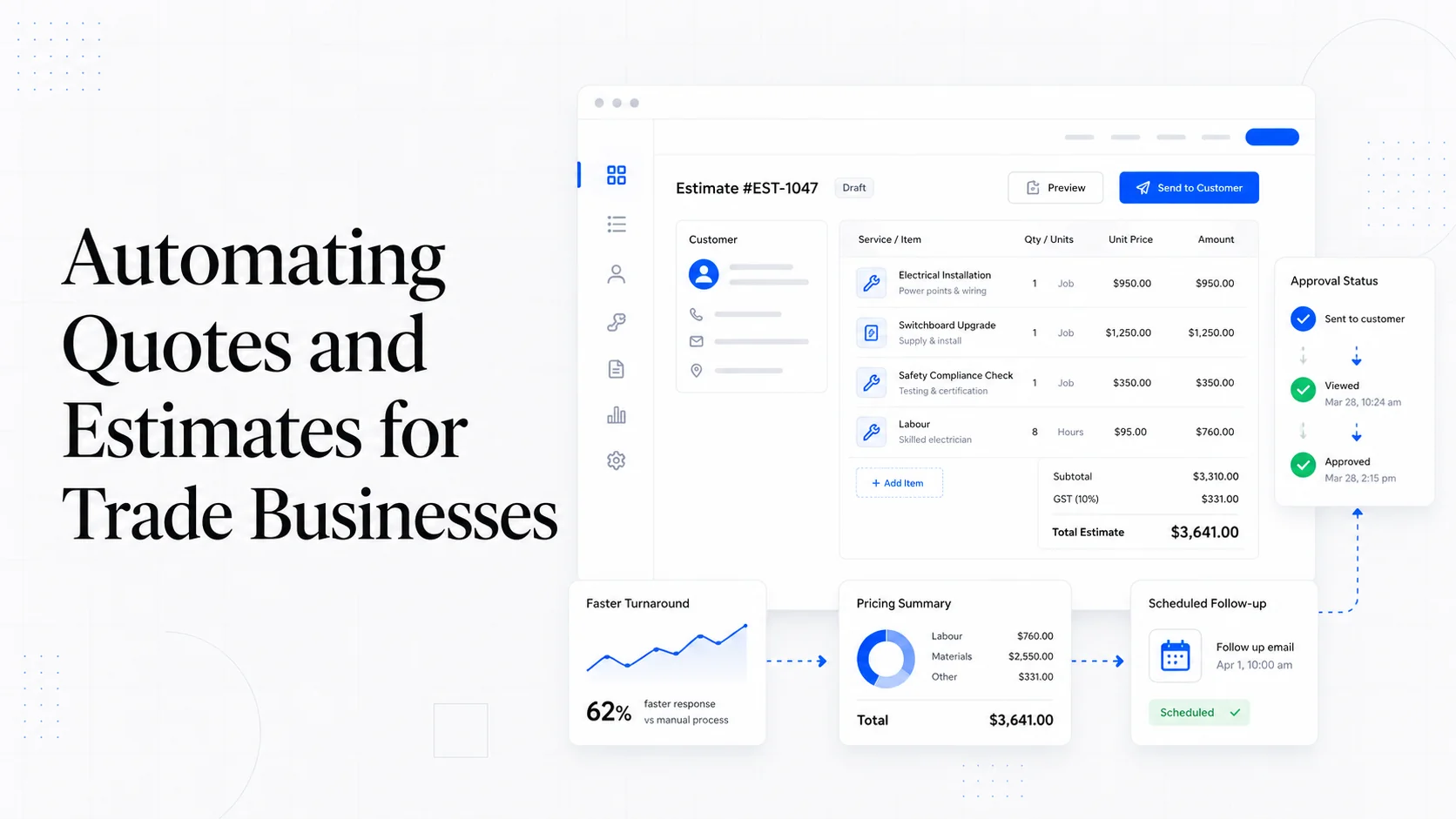
From Contact Form to CRM: The Minimum Lead Pipeline Every Service Business Should Automate
A practical lead pipeline for service businesses: connect forms, calls, email, CRM records, reminders, follow-ups, and reporting so good leads stop disappearing.
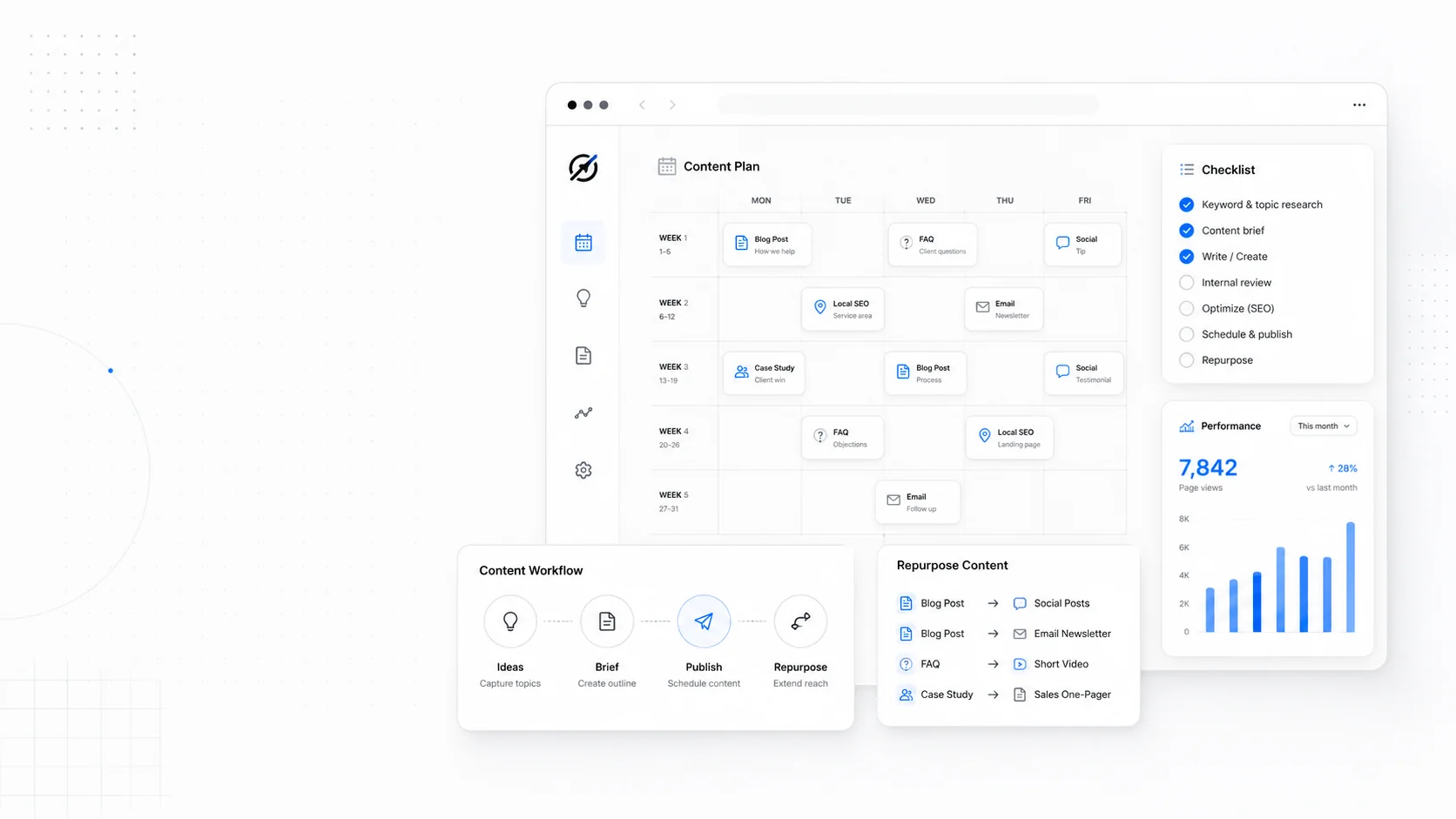
The 2026 Website Content Refresh Playbook: Updating Old Pages Without Breaking SEO
A practical content refresh process for small business websites: how to update stale pages, preserve rankings, improve AI search visibility, and avoid SEO mistakes.
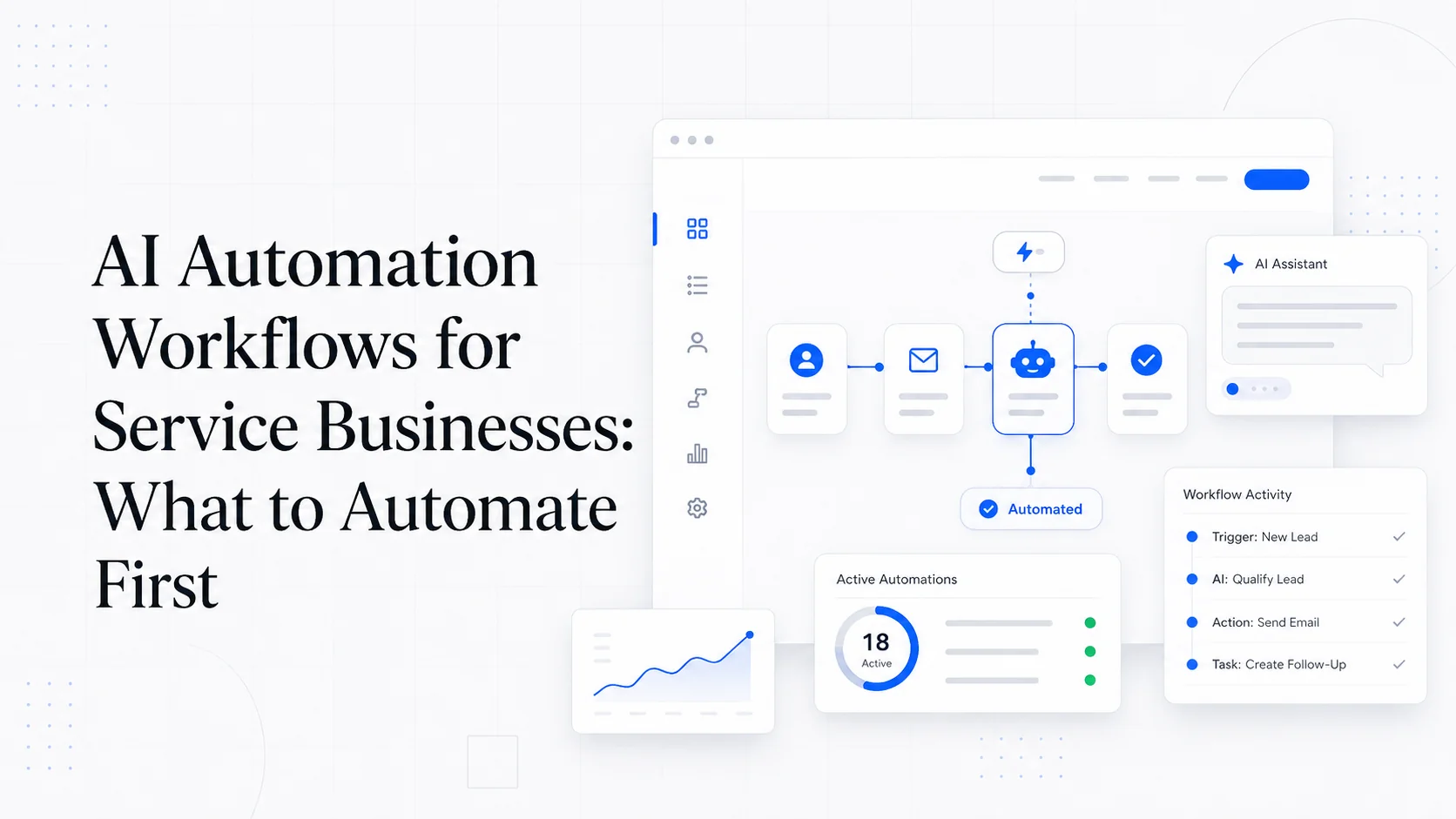
The AI Chat Widget Decision: When It Helps Leads and When It Hurts Trust
AI chat widgets can qualify leads and answer common questions, but they can also slow the site, invent answers, mishandle privacy, and damage trust. Here is how to decide.
Keep reading?
More field notes from building modern websites and software for real businesses.