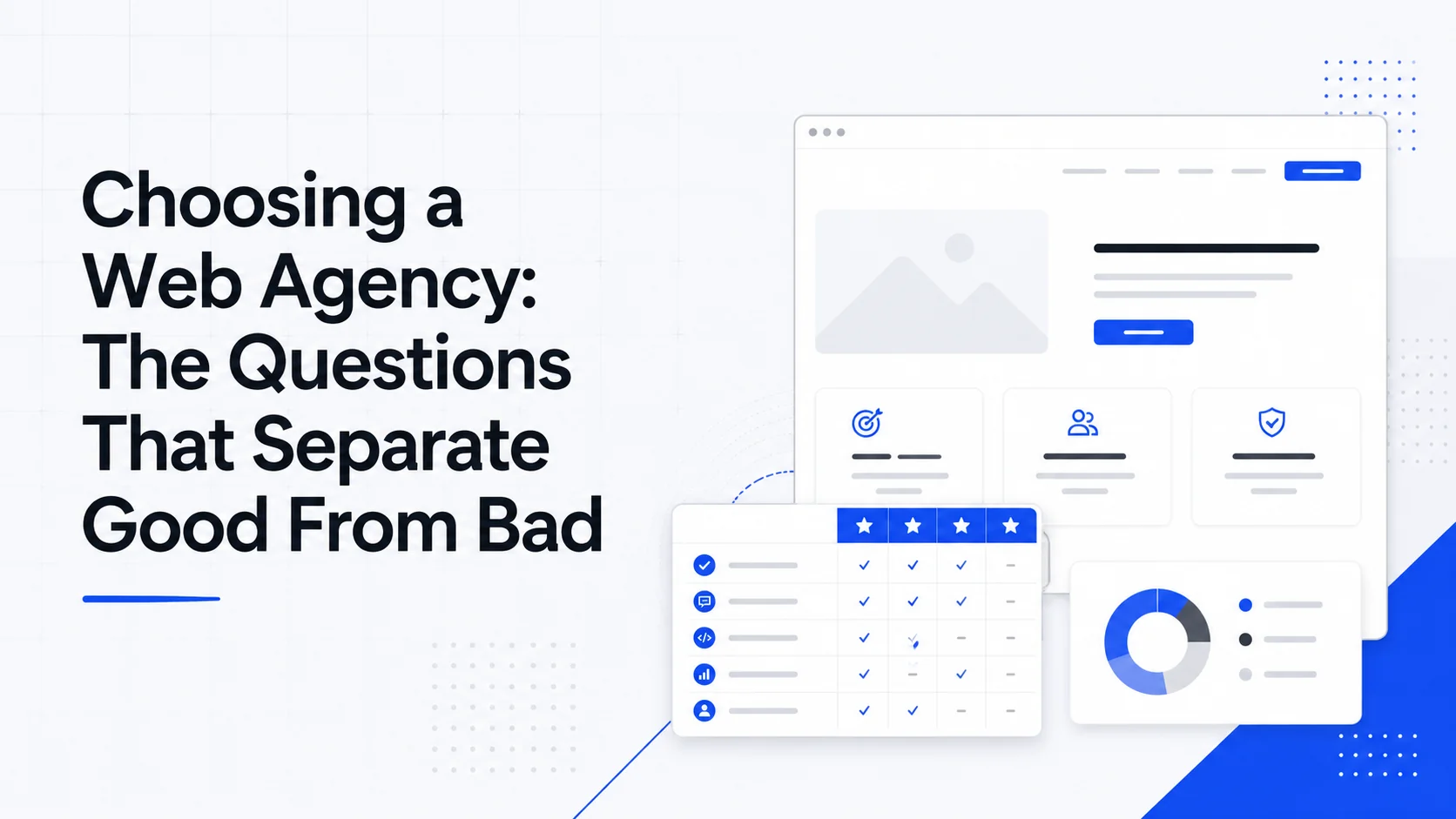
Choosing a Web Agency: The Questions That Separate Good From Bad
The questions that separate good web agencies from bad ones: process, communication, team continuity, post-launch support, references, and pricing transparency.
The hardest part of buying a website is not the website. It is the agency. Two agencies can quote the same scope at the same price, deliver projects that look superficially identical, and produce wildly different business outcomes. The difference shows up in the details that nobody asks about during the sales call.
This post is the question list we wish every small business owner had in front of them when they take that first introductory call. The questions are not designed to trip up an agency. They are designed to surface the working patterns that separate the agencies who will quietly do excellent work from the ones who will leave you with a broken site and an unanswered email.
Why Good and Bad Agencies Look the Same on the Surface
Almost every web agency has a portfolio with attractive screenshots, glowing testimonials, and a "process" page that mentions discovery, design, development, and launch. The websites of bad agencies are often better-looking than the websites of good agencies, because bad agencies invest in their own marketing while good agencies invest in their clients.
The signal is in the working patterns: how they scope, how they communicate, how they staff, how they handle the post-launch period, how they price, and how they behave when something goes wrong. None of that is visible in a portfolio.
The Clutch agency directory and DesignRush rankings are reasonable starting points for vetting, but neither replaces direct conversation with the agency about how they actually work. The questions below are designed to extract that.
Questions About Process
Process is not the same as ceremony. A good process is the smallest amount of structure that produces a reliable outcome. A bad process is either no structure (you do not know what is happening week to week) or pure ceremony (every change requires three meetings and a signed approval form).
1. Walk me through what the first four weeks of this engagement would look like.
A good agency answers this in plain language. Week one: kickoff, account setup, content audit. Week two: discovery interviews, competitive review, draft information architecture. And so on. They name deliverables and review points.
A bad agency answers in jargon or generalities. "We start with a deep-dive discovery to align on strategic objectives and create a roadmap." That is a non-answer. Push for the specifics.
2. Who on your team will I actually talk to, day to day?
You want to know the names and roles. Project manager, designer, developer, copywriter if applicable. If the answer is "you'll have a dedicated account manager who coordinates with our team," ask if you can talk directly to the people doing the work when needed. The honest answer should be yes.
The HBR research on consulting and agency engagements consistently finds that direct access to the people doing the work, rather than going through an account layer, correlates strongly with project success. The account-layer model exists to protect the agency's resourcing flexibility, not to serve the client.
3. What does your discovery phase look like, and what comes out of it?
A good agency has a defined discovery phase that produces written artifacts: a problem statement, an audience definition, a sitemap, a content plan, and a measurable success definition. They review these with you before moving into design.
A bad agency skips discovery, treats it as a sales call, or charges for it but produces nothing tangible.
4. How do you handle scope changes mid-project?
You want a clean, written change-order process. New requirement, written estimate, signed approval, then work begins. The bad answer is "we're flexible, just tell us what you need." That sounds friendly, but it is how scope creep starts and trust ends.
Questions About Communication
Communication patterns are the single best predictor of whether you will enjoy working with an agency. They are also the easiest pattern to evaluate during the sales process, because the way they handle pre-sale communication is usually how they will handle in-flight communication.
5. How often will we have status updates, and in what format?
A reasonable cadence for a small to mid-sized project is a weekly written update plus a 30-minute call every other week. Anything less than that, and you will lose visibility. Anything more, and the project is being run by meetings.
Look for written updates as the default, with calls as the supplement. The Basecamp guide on remote work makes the case clearly: written communication produces better-quality decisions and a usable record. Verbal-only communication produces decisions that nobody can refer back to.
6. What is your typical response time to email and Slack messages?
A good agency commits to a response window (24 to 48 business hours is normal) and sticks to it. A bad agency promises immediate responses and then disappears for a week when the project is not in active design.
Test this during the sales process. Send a question at 4 pm on a Wednesday. If the response comes back at 11 am Friday with a substantive answer, you know what working with them will look like.
7. What tools do you use for project management and asset sharing?
You want to know whether you will be in their tool, your tool, or both. Common modern stacks: Notion, Linear, Basecamp, Figma, Loom for asynchronous walkthroughs.
The right answer is whichever tool the team uses well, not the trendiest one. The wrong answer is "we'll set up a Slack channel and email things back and forth." Loose communication invites lost messages and missed decisions.
Questions About the Team
A small business is buying the work of specific humans. Not the agency brand. Specific humans. The questions below surface who those humans actually are.
8. How long has the team that will work on my project been with the agency?
You are looking for stability. A team where the average tenure is over two years tends to produce coherent work. A team where the designer started last month and the developer is leaving in three weeks is going to produce inconsistent work.
This is a fair question and a good agency answers it directly. If they get evasive, that is a signal in itself.
9. Is the team in-house or do you subcontract?
There is no wrong answer here, but you deserve to know. A boutique agency that subcontracts a few specialists is fine, as long as they are honest about it. An agency that pretends to have a 30-person in-house team but actually subcontracts 80 percent of the work is a problem, because the quality and continuity depend on contractors you cannot evaluate.
The Forrester research on agency models shows that hybrid models (in-house core team plus a stable network of specialists) often outperform pure in-house or pure subcontracted models, but only when the agency is transparent about who is doing what.
10. What happens if the lead designer or developer on my project leaves the agency mid-project?
This is the contingency question. You want to hear that there is a documented handoff process, that work products are reviewed across the team, and that another person can pick up the thread without restarting the project.
If the answer is "that hasn't happened" or "we'd figure it out," the contingency does not exist. Things that have not been planned for tend to happen at the worst possible moment.
Questions About Post-Launch Support
The launch is not the end of the project. Most of the value of a website is captured in the months and years after launch. The agencies who think this way produce different work than the ones who treat launch as the finish line.
11. What does post-launch support look like for the first 90 days?
A good answer covers a defect window (bug fixes at no charge for the first 30 to 60 days), a warranty on browser and platform compatibility, and a defined response time for issues that arise.
A bad answer is "we offer ongoing support packages starting at $X per month," without specifying what is included in the launch itself.
12. What is your maintenance offering, and what does it actually include?
Modern web maintenance is not just "we'll back up your site." It includes platform updates, security patching, uptime monitoring, performance monitoring, accessibility audits, content updates, and often a small monthly allowance for design and development changes. Our website care and maintenance page covers what a full plan looks like.
If the agency does not offer maintenance, or offers it as an afterthought, ask who will. A site without ongoing care silently degrades. The web.dev research on long-term performance shows that sites without active maintenance lose Core Web Vitals scores within 12 to 18 months as third-party scripts, image weight, and CMS bloat accumulate.
13. If we want to make changes ourselves, can we?
The answer should be yes, with reasonable boundaries. A modern site built on a sensible CMS or content layer should let your non-technical staff update text, swap images, publish blog posts, and manage simple page changes without calling the agency.
If the answer involves a complicated workflow, a custom interface that nobody has documented, or "you really shouldn't touch the production site," you are about to be locked in.
Questions About References
References are the single most underused signal in agency selection. Most buyers ask for them, never call them, and miss the most useful piece of information available.
14. Can I speak with three clients you have worked with in the last 12 months?
Recent matters. References from five years ago tell you about a different version of the agency. You want clients whose projects launched in roughly the last year.
When you call references, ask:
- Did the project come in on time and on budget? If not, how were changes handled?
- How responsive was the team?
- What is the post-launch experience like? Are issues handled quickly?
- Would you hire them again? For what kind of project would you not hire them?
- Was there anything you wish you had known before signing?
That last question is the gold. Most reference calls fail because the buyer asks soft questions and the reference gives soft answers. The "wish I had known" question pulls out the real signal.
15. Can you point me to a project that did not go well, and tell me what you learned?
A good agency has a thoughtful answer. A great one volunteers it. An agency that claims every project has been a roaring success is either lying or has not done enough projects to learn anything.
This is the question that separates marketing-driven agencies from craft-driven ones.
Questions About Pricing
Pricing transparency is one of the clearest signals of whether an agency respects you as a buyer. The patterns to watch for are predictable.
16. How is the price built up, and what would change it?
A good agency can walk you through how they arrived at the number. Discovery: 40 hours. Design: 80 hours. Development: 160 hours. PM: 40 hours. Hourly rate: $X. Fixed-fee buffer: $Y. Total: $Z.
A bad agency quotes a round number with no breakdown. The round number usually has 30 to 50 percent margin baked in to cover the things they did not bother to scope properly.
17. What is and is not included in the quoted price?
Look for explicit lists. What rounds of revisions are included on design. How many net-new pages of copy. Whether stock photography is included or charged separately. Whether the post-launch support window is included.
Vague proposals turn into expensive surprises. Specific proposals turn into clean handoffs.
18. What are typical change-order costs?
Ask for an hourly rate for additional work outside the scoped project. A reasonable range for a senior agency in 2026 is $125 to $250 per hour for design and development. Above $300 per hour for non-specialized work usually means the agency is testing your limits. Below $80 per hour means the work is being done by someone junior, which may or may not be fine depending on the change.
The BLS data on web developer wages and the Clutch hourly rate research both give useful baselines for what reasonable rates look like.
Red Flags You Should Walk Away From
Some signals are clear enough that they should disqualify an agency on the spot.
- They will not put pricing in writing.
- They will not commit to a timeline with milestones.
- They will not name the people who will do the work.
- They retain ownership of source code or design files.
- They require 100 percent payment up front.
- They cannot or will not provide three recent references.
- They get defensive when you ask procedural questions.
- Their own website is broken, slow, or full of placeholder content.
- They use high-pressure sales tactics or "deals that expire today."
- They cannot articulate what they would not do for you.
We covered the broader question of what good proposals look like in our website RFP template post. The agencies that pass the questions above are the ones who will produce the kind of proposal worth signing.
A Sane Way to Make the Final Decision
After running two or three agencies through these questions, you will usually have a clear front-runner. If you do not, the agencies are too similar and the deciding factor should be the team you most want to work with for the next four months.
Trust your gut on the people. The work is going to involve dozens of conversations, design reviews, and small judgment calls. The agency you respect and enjoy talking to will produce better work than the one with a slightly cheaper proposal but a frustrating dynamic.
If a project is significant (north of $20,000), the Harvard Business Review on procurement decisions suggests including a paid pilot or discovery phase as a final step. Pay the front-runner $2,000 to $5,000 to do a defined piece of work (a strategy document, a design exploration of one template). You will learn more in two weeks of paid work than in two months of sales calls.
Action Items
If you are about to choose an agency this quarter:
- Run two or three finalists through the question list above.
- Make actual reference calls. Ask the "wish I had known" question.
- Test their email response time during the sales process.
- Insist on a written, line-item proposal, not a one-line price.
- Confirm in writing who owns the source code, design files, and content.
- Consider a paid pilot before the full engagement, especially for larger budgets.
- Trust your gut on the people. Cheaper is not better if you dread every meeting.
Choosing an agency well is more like hiring a senior employee than buying a piece of software. The questions you ask up front determine the quality of the working relationship, and the working relationship determines the quality of the work. If you would like a candid second opinion on agencies you are evaluating, get in touch or look through our project portfolio for examples of how we approach the work.
More posts from the blog.
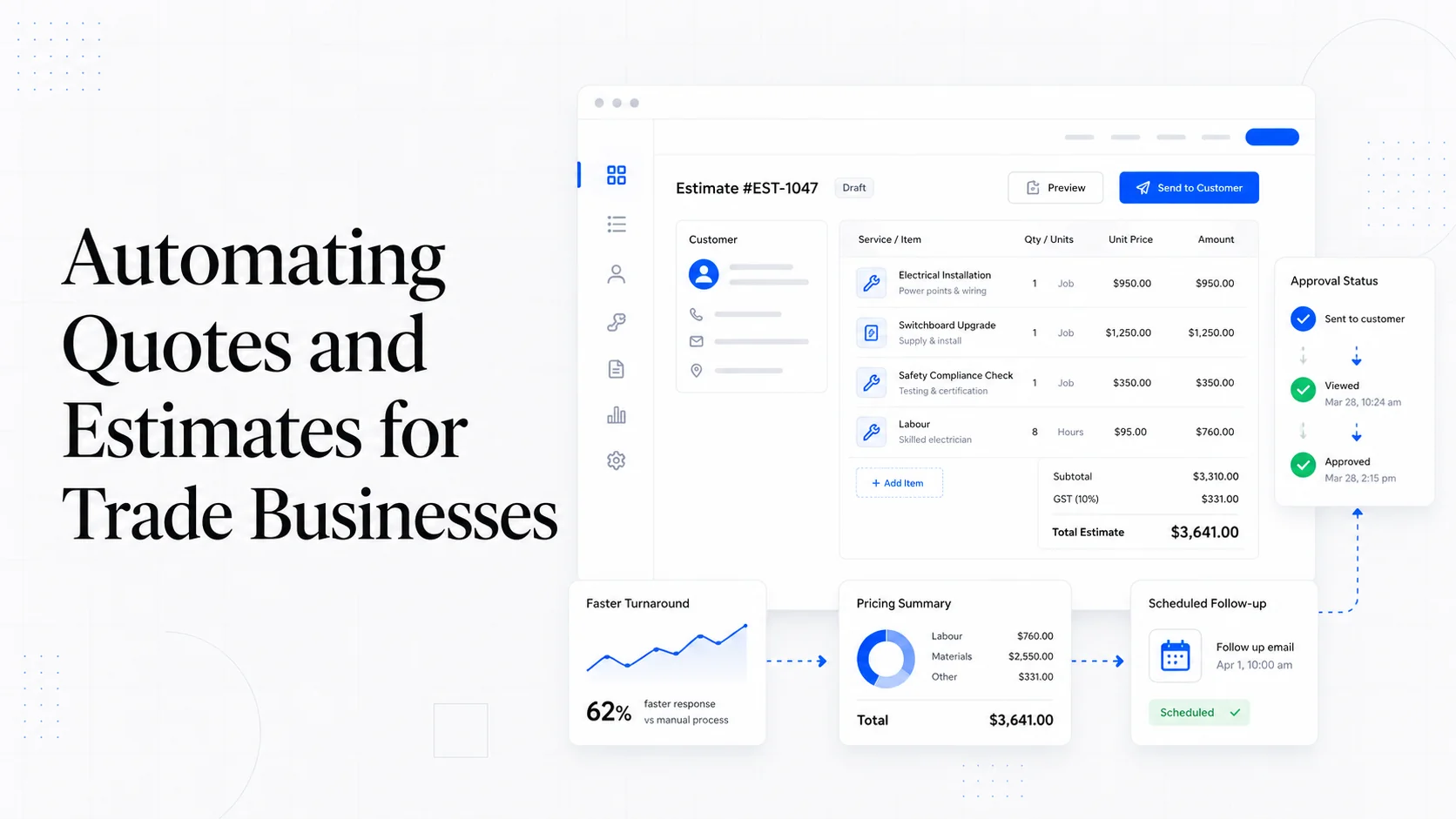
From Contact Form to CRM: The Minimum Lead Pipeline Every Service Business Should Automate
A practical lead pipeline for service businesses: connect forms, calls, email, CRM records, reminders, follow-ups, and reporting so good leads stop disappearing.
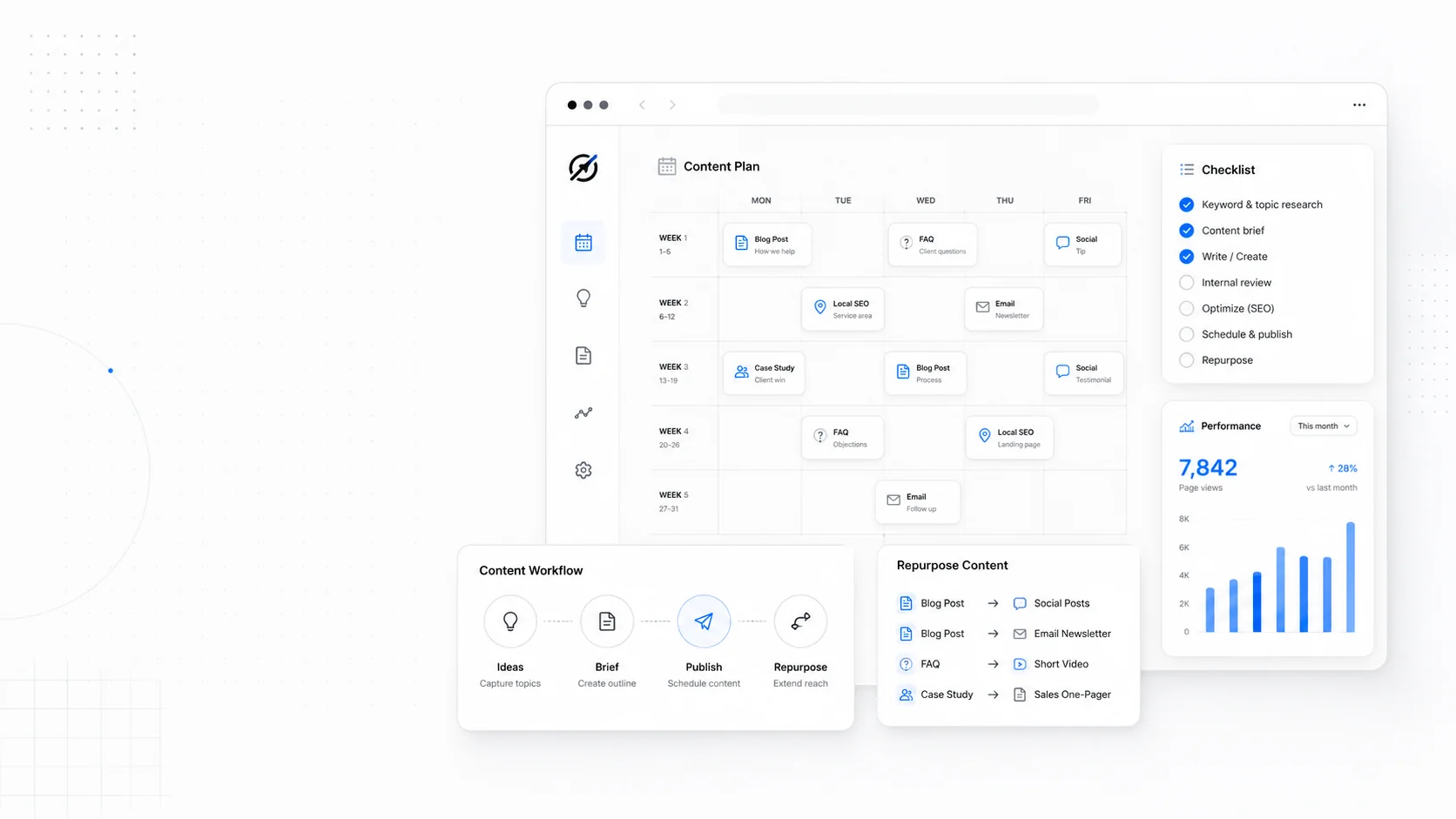
The 2026 Website Content Refresh Playbook: Updating Old Pages Without Breaking SEO
A practical content refresh process for small business websites: how to update stale pages, preserve rankings, improve AI search visibility, and avoid SEO mistakes.
The AI Chat Widget Decision: When It Helps Leads and When It Hurts Trust
AI chat widgets can qualify leads and answer common questions, but they can also slow the site, invent answers, mishandle privacy, and damage trust. Here is how to decide.
Keep reading?
More field notes from building modern websites and software for real businesses.