
Website RFP Template and Checklist for Non-Technical Business Owners
A plain-English website RFP template and checklist covering scope, integrations, payment terms, IP ownership, and the red flags that separate good agencies from bad.
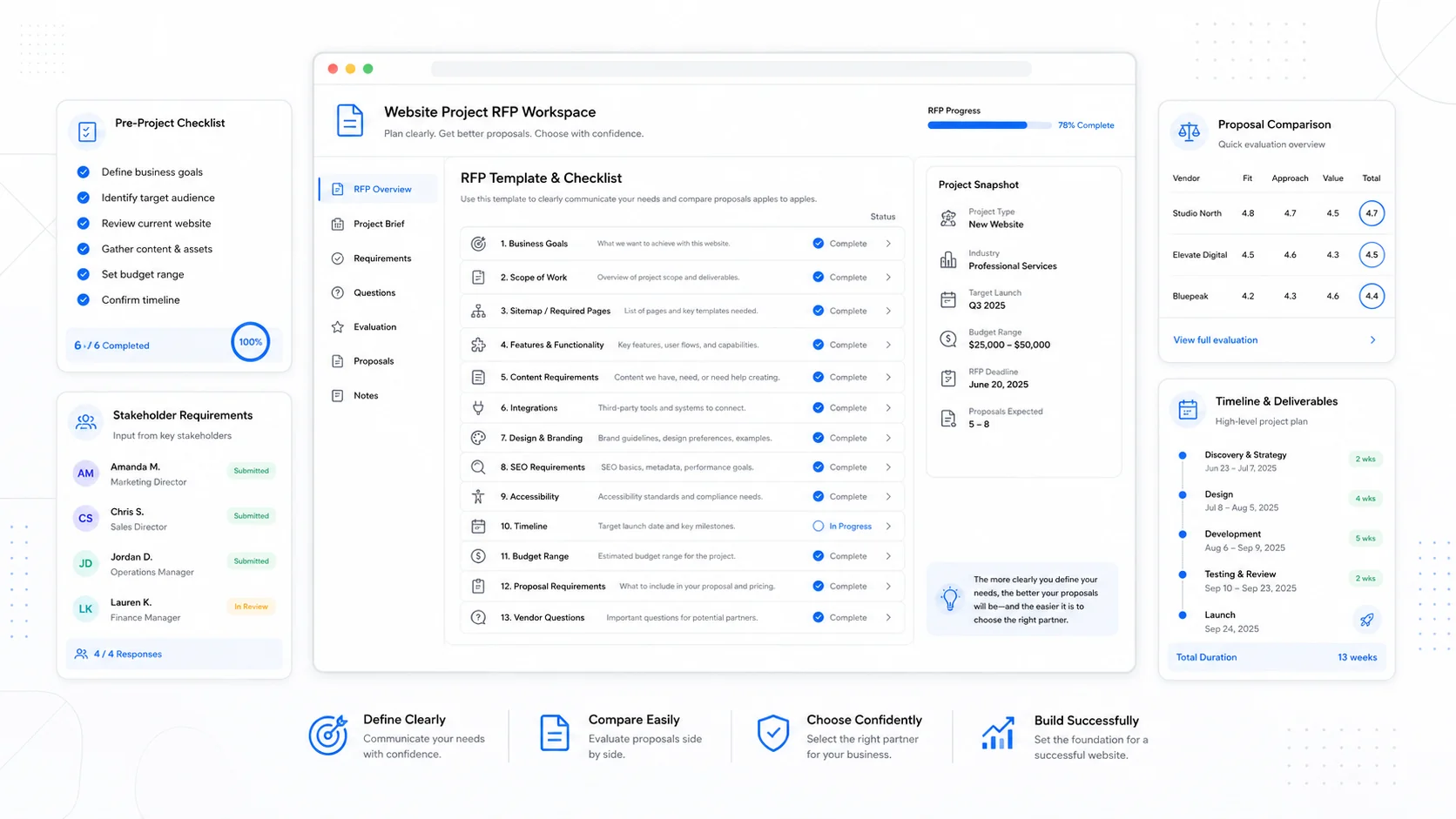
Most website RFPs we see from small businesses are either a single paragraph that asks for "a new modern website" or a 30-page document copied from a Fortune 500 procurement template. Neither one helps you get good proposals back. The first leaves too much to the imagination. The second scares away the boutique agencies and freelancers who are usually the right fit for a small business.
The right RFP is somewhere in the middle. It is specific about outcomes, honest about constraints, and short enough that a good agency will actually read it. This post lays out the template, the checklist, and the proposal red flags to watch for.
What an RFP Is Actually For
An RFP is not a contract. It is a hiring document. It exists to do four things:
- Force you to articulate what you actually want, before anyone else gets involved.
- Give qualified vendors enough information to write an honest proposal.
- Filter out vendors who are not a fit, before you waste hours on calls.
- Create a written reference that protects both sides during the project.
If your RFP does not do those four things, it is not pulling its weight. The SBA's guidance on hiring vendors makes the same point: a clear scope is the single biggest factor in a successful contractor relationship.
What to Include in a Website RFP
A useful RFP for a small or mid-sized business website should fit in 5 to 10 pages. The sections below are the ones that matter.
1. Background on Your Business
One paragraph. What you do, who you serve, how long you have been doing it, and what makes you different. Skip the marketing speak. A good agency uses this section to decide whether they understand your industry well enough to do the work.
2. The Problem You Are Trying to Solve
This is the section most RFPs get wrong. They describe the deliverable ("a 12-page website") instead of the problem ("our current site converts at 0.8 percent and our competitors are averaging 3 percent based on Google's retail benchmarks, which costs us roughly 30 leads per month").
Frame it as outcomes, not features. Examples:
- "Our current site loads in 6 seconds on mobile and we are losing search rankings."
- "Sales spends three hours a week manually entering form submissions into our CRM."
- "We cannot update content without paying our previous developer."
A good agency will respond to outcomes with strategy. A bad one will respond to features with a price list.
3. Scope of Work
Be specific about what is in scope and what is not. Use bullet lists, not paragraphs.
In scope might include:
- Discovery and strategy phase.
- Information architecture and sitemap.
- UX wireframes and visual design.
- Frontend development (responsive, mobile-first).
- Content migration from old site.
- Up to N net-new pages of copy (if writing is part of the engagement).
- CMS setup and editor training.
- Analytics and conversion tracking setup.
- 301 redirect plan and post-launch SEO monitoring.
- 30-day post-launch support window.
Out of scope might include:
- Brand identity work.
- Net-new copywriting beyond the listed pages.
- Photography and video production.
- Paid media campaign management.
- Ongoing maintenance after the support window (handled separately).
The clearer this section is, the cleaner the change-order conversations will be later. Trello's project management research consistently shows that scope ambiguity is the single largest source of project conflict.
4. Integrations and Technical Requirements
List every system the new site needs to talk to. Even the obvious ones.
A typical small business list:
- CRM (HubSpot, Pipedrive, Salesforce, etc.)
- Email marketing (Mailchimp, ActiveCampaign, ConvertKit)
- Payment processor (Stripe, Square, PayPal)
- Booking or scheduling (Calendly, Acuity, custom)
- Analytics (Google Analytics 4, Plausible, Fathom)
- Tag management (Google Tag Manager)
- Industry-specific tools (your billing system, MLS, EHR, PMS, etc.)
For each, note whether the integration is must-have or nice-to-have, and which direction data flows.
5. Content and SEO Requirements
State whether you need migration of existing content, net-new copy, or both. Include a baseline of how many pages and posts the current site has, and which ones get meaningful traffic.
If SEO continuity matters (and for any site over two years old, it does), say so explicitly. Reference Google's site move guidance and ask the agency to explain how they will preserve rankings during the rebuild. We covered this in detail in our SEO-friendly redesign checklist.
6. Performance and Accessibility Standards
Set the bar. A useful default for a 2026 site:
- Core Web Vitals in the green for at least 75 percent of mobile sessions.
- Mobile Lighthouse score of 90 or above.
- WCAG 2.2 AA compliance for accessibility.
- Time to first byte under 800 ms from your primary market.
Asking for these up front is much cheaper than asking for them after launch.
7. Timeline
Give a realistic window. A small business marketing site typically takes 8 to 16 weeks from kickoff to launch when scope is well defined. Anything promised in 4 weeks is either a template swap or a lie. Anything taking 9 months for a small business marketing site means scope was never controlled.
State your hard date if there is one (a trade show, a fiscal year-end, a product launch). State it as a constraint, not a wish.
8. Budget Range
This is the section most non-technical buyers want to leave blank. Do not. A budget range filters out mismatched vendors before either side wastes time.
A simple range works fine: "$8,000 to $15,000" or "$25,000 to $40,000." The Clutch agency directory shows that agencies who refuse to engage without a budget range are usually the ones who do this work efficiently. The ones who insist on quoting blind tend to over-quote, then negotiate down.
If you genuinely do not know the range, our piece on website pricing in 2026 lays out the tiers and what each one buys.
9. Deliverables and Acceptance Criteria
Be specific about what "done" looks like for each deliverable. Examples:
- Sitemap delivered as a PDF and as a clickable Miro or FigJam board.
- Wireframes delivered for all unique page templates.
- Visual design delivered in Figma with developer handoff prepared.
- Frontend delivered as a staging URL on a production-equivalent environment.
- CMS training delivered as a recorded session plus written documentation.
If the deliverable is not written down, you cannot verify it.
10. Payment Terms
Spell these out. A typical structure for a small to mid-sized project:
- 30 to 40 percent on contract signing.
- 30 percent on design approval.
- 30 to 40 percent on launch and final acceptance.
Avoid the "100 percent up front" model unless you know the agency well. Avoid the "100 percent on completion" model too — it usually means the agency does not have working capital, which becomes your problem if anything slips. The SBA contracts guidance covers payment milestones in more depth.
11. Intellectual Property and Code Ownership
This is non-negotiable. The contract should specify:
- All custom design files become your property on final payment.
- All custom code becomes your property on final payment, with source delivered.
- The agency retains rights to general methodologies and reusable libraries.
- You receive a complete export of content, media, and database.
- Domain and hosting accounts are in your name from day one.
If an agency wants to keep the source code, walk away. We have seen too many small businesses held hostage on rebuilds because the original developer would not release the codebase.
12. Post-Launch Support
State what you expect. A typical small business arrangement:
- A 30-day defect window covering bugs and broken functionality at no charge.
- An ongoing website care plan at a defined monthly rate.
- A defined support response time (24-48 business hours is reasonable).
- An optional retainer for content updates and small enhancements.
13. References and Examples
Ask for three references from clients in the past two years, ideally at a similar scope and budget. Ask for live URLs of work the agency considers representative. If the agency cannot provide either, you are looking at the wrong agency.
Red Flags in the Proposals That Come Back
Once proposals arrive, these are the patterns that should give you pause.
The price is dramatically lower than every other proposal. This usually means the agency has not understood the scope. The cheap quote becomes the most expensive project once change orders start. Forrester's vendor evaluation research shows that the lowest bidder wins less than 20 percent of successful enterprise engagements for exactly this reason.
The proposal is full of jargon and short on plain English. "Synergistic, AI-powered, blockchain-enabled experience platform" tells you nothing about whether they can build a fast, accessible website. Senior practitioners write in plain English.
No discovery or strategy phase. A proposal that jumps straight to design and development, with no time allocated to understanding your business, is a template build pretending to be custom.
Vague timeline with no milestones. "Approximately 12 weeks" with no week-by-week breakdown means the agency has not actually scoped the work. Ask for a milestone schedule before signing.
No mention of analytics, SEO, or performance. A modern website is judged on measurable outcomes. An agency that does not mention them in the proposal is going to deliver something that looks nice and converts poorly.
They will not name the team. If you cannot find out who will actually do the work, you are talking to a sales layer that may resell to junior contractors. Ask for the bios of the actual designer, developer, and project manager assigned to your project.
Aggressive payment terms or large up-front demands. 50 percent up front is reasonable. 100 percent up front is a credit problem. Anything that locks you into payments before deliverables means the leverage is all on their side.
Hostility to questions. A good agency welcomes scrutiny. The ones who get defensive when you ask about IP ownership, code handoff, or post-launch support are the ones who plan to make those things difficult.
Templated proposal with your name swapped in. Look for places where they reused content from another client and forgot to update it. We have seen literal "Lorem Ipsum" left in proposals from agencies that charge five figures.
We covered the broader question of how to pick a vendor in our piece on choosing a web agency. The RFP is the start of that filter, not the end.
A Two-Page Mini-Template for Time-Pressed Owners
If you do not have time to write a full RFP, this two-page version is enough to get useful proposals back from a small handful of vendors:
Section 1 — Us: Two sentences on the business, one sentence on the problem the new site has to solve.
Section 2 — Scope: Bullet list of what is in scope (5-10 lines), one line of what is out of scope.
Section 3 — Must integrate with: List of three to five tools by name.
Section 4 — Budget and timeline: A range and a target launch date.
Section 5 — Asks: "Please reply with: a one-page approach, a milestone timeline, a price range with what is and is not included, three relevant references, and one example URL of a similar project."
Send it to three to five vendors. Read what comes back. Talk to the two that wrote the most thoughtful response, regardless of price.
Action Items
If you are about to send a website RFP this quarter:
- Spend a half day writing down outcomes before any features. Use the prompts above.
- List every integration the site needs by name, not category.
- Set a budget range and a realistic timeline. Both filter the right vendors in.
- Specify IP and code ownership terms in the RFP itself, not the contract.
- Ask for three references from real, recent, similar projects.
- Send it to no more than five vendors. More than that is a sign you do not know what you want.
- Read every proposal twice. The second read is where the red flags surface.
A good RFP is not paperwork for the sake of paperwork. It is the cheapest insurance you can buy on a project that will shape how customers find you for the next four years. If you want a second pair of eyes on the proposals you receive, get in touch and we will give you an honest read on which one is actually offering the best work, regardless of price.
More posts from the blog.
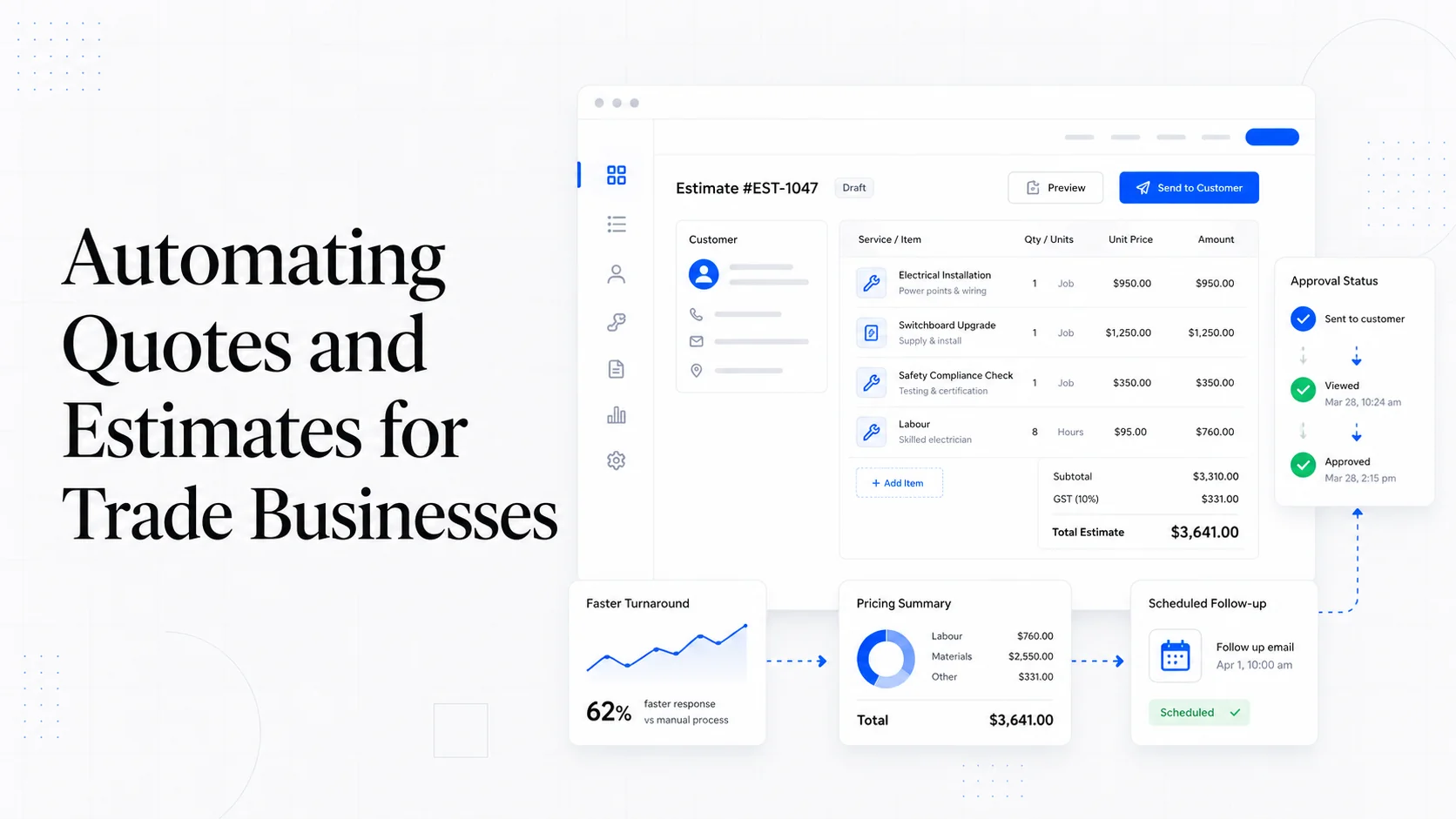
From Contact Form to CRM: The Minimum Lead Pipeline Every Service Business Should Automate
A practical lead pipeline for service businesses: connect forms, calls, email, CRM records, reminders, follow-ups, and reporting so good leads stop disappearing.
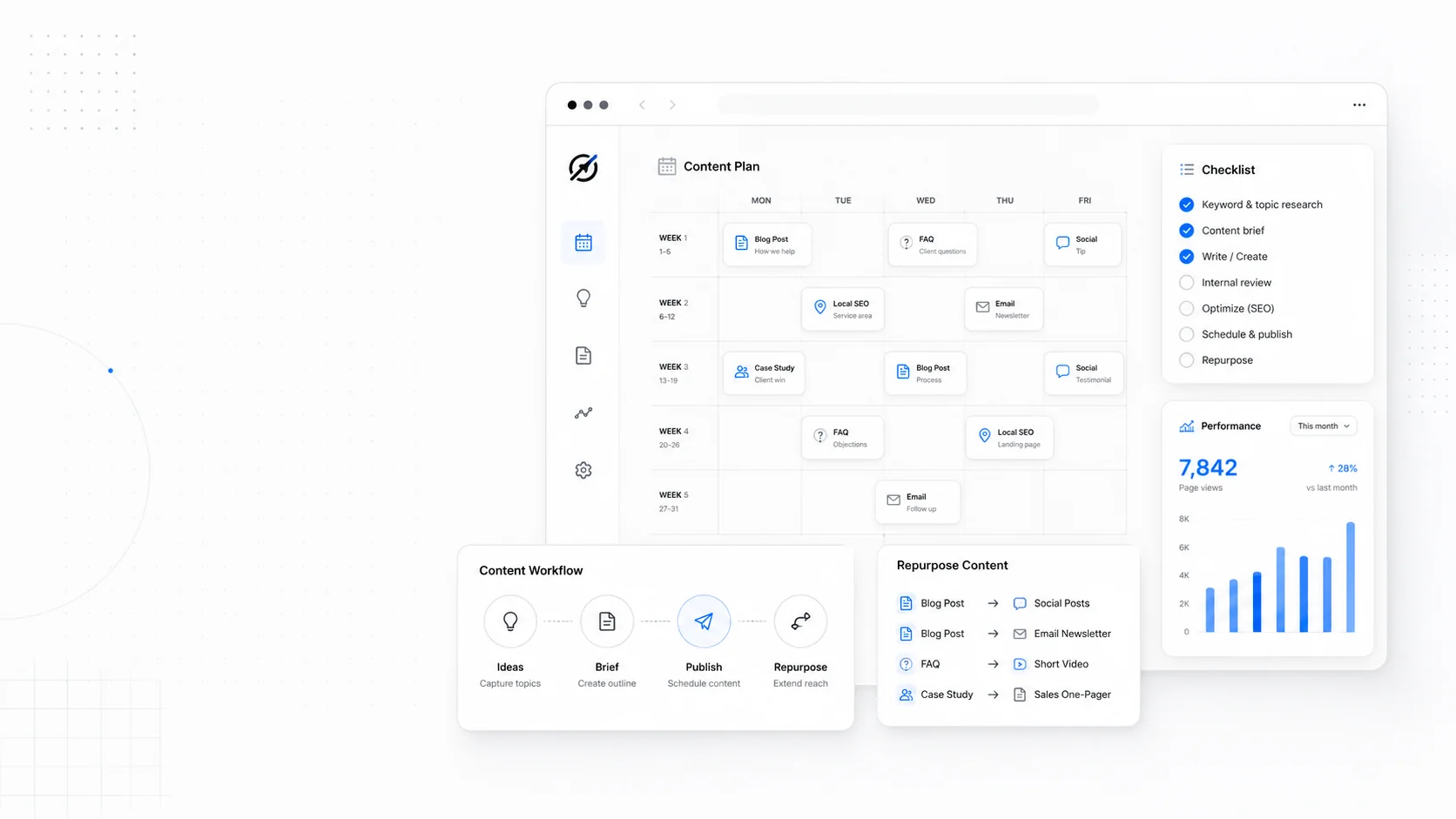
The 2026 Website Content Refresh Playbook: Updating Old Pages Without Breaking SEO
A practical content refresh process for small business websites: how to update stale pages, preserve rankings, improve AI search visibility, and avoid SEO mistakes.

The AI Chat Widget Decision: When It Helps Leads and When It Hurts Trust
AI chat widgets can qualify leads and answer common questions, but they can also slow the site, invent answers, mishandle privacy, and damage trust. Here is how to decide.
Keep reading?
More field notes from building modern websites and software for real businesses.