
How Much Should a Website Cost in 2026? An Honest Pricing Breakdown
An honest 2026 breakdown of website costs: $500, $5K, and $50K tiers, what each actually delivers, hidden costs, hosting, care, and a simple ROI math.
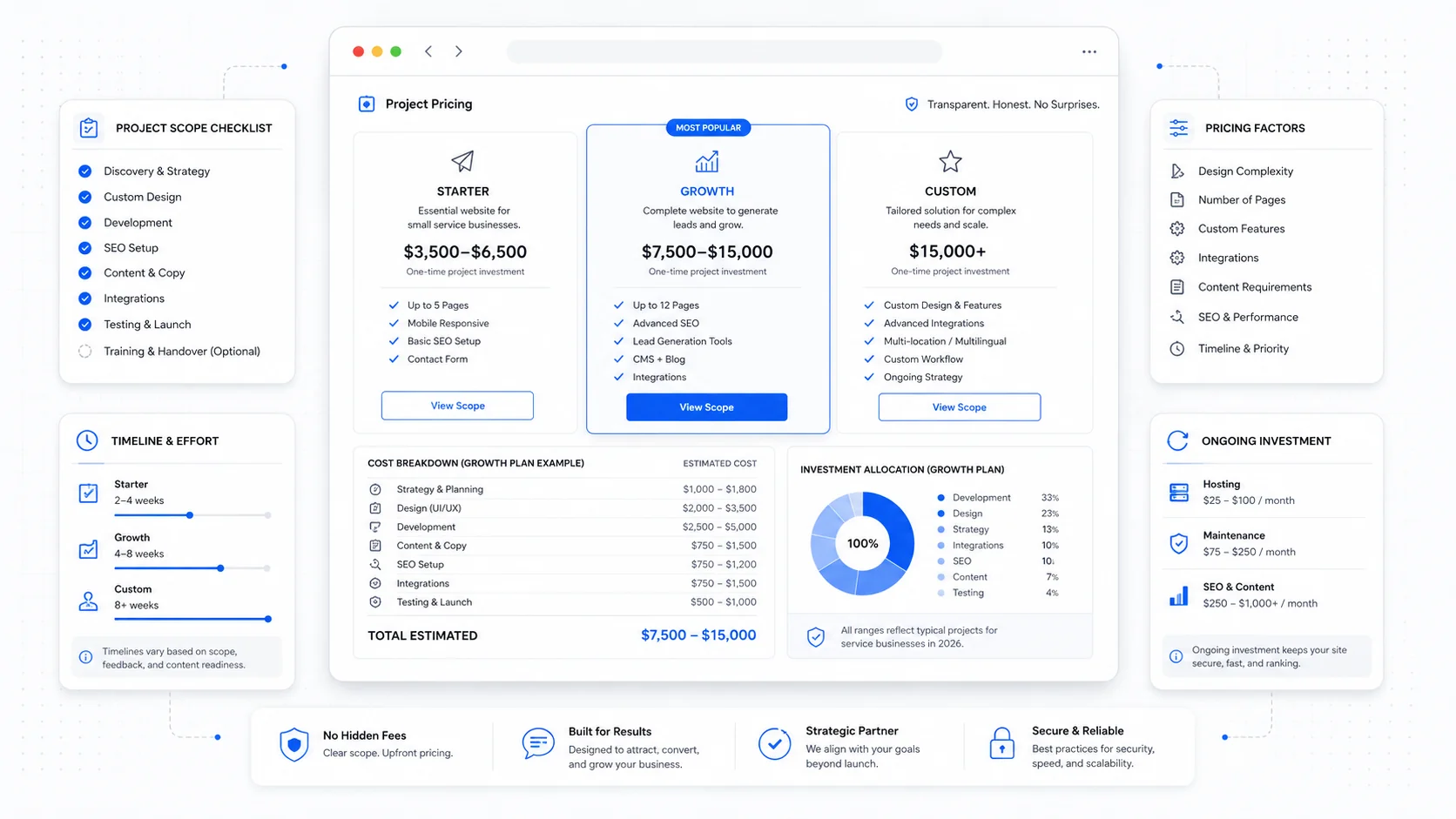
The first question almost every business owner asks before starting a website project is the wrong one. They ask "what does a website cost?" The right question is "what does a website that does the job for my business cost?" Those are very different questions, and the answers vary by an order of magnitude.
A website is a piece of capital equipment. It is not a brochure. It is the machine that turns search traffic, ads, referrals, and direct visits into qualified leads, bookings, and revenue. The price of that machine depends on how much work it has to do, how reliably, and for how long.
This post breaks down what the real tiers look like in 2026, what each one actually buys you, where the hidden costs live, and how to do the basic ROI math before you commit a dollar.
Why "How Much Does a Website Cost" Is the Wrong Question
Asking what a website costs in 2026 is like asking what a vehicle costs. A used scooter and a delivery truck are both vehicles. They cost different amounts because they do different jobs. The same is true for a one-page DIY site and a custom-built lead engine that integrates with a CRM, a booking system, and a payment processor.
Industry surveys put the spread in stark terms. WebFX's 2025 website cost data shows small business sites ranging from a few hundred dollars to well over $75,000, with most falling somewhere between $2,500 and $40,000 depending on scope. Clutch's agency pricing report shows the same wide spread, driven mostly by complexity and team experience rather than geography.
Before you settle on a number, you need to settle on a job description. What is the website supposed to do, for whom, how often, and at what level of reliability? The price falls out of that.
Tier 1: The $500 Site (DIY and Templates)
A $500 site in 2026 is almost always a DIY build on a template platform like Squarespace, Wix, or a free WordPress theme. The dollar figure usually covers a year of hosting, a domain, and a few hours of someone's evening time.
What you actually get:
- A theme that thousands of other businesses are using.
- Hosting you do not control and cannot easily move.
- Stock photos, generic copy, and basic forms.
- No real strategy on conversion, SEO structure, or analytics.
- A page that loads "fine" on desktop and is often slow on mobile.
This tier is appropriate in two specific cases. The first is a true zero-revenue starting point, where the site exists only to confirm the business is real. The second is a temporary placeholder while a real build is in flight. Outside of those, the math gets ugly fast.
A $500 site that loses one $3,000 client per quarter because it loads in seven seconds, lacks trust signals, or sends form submissions to a personal Gmail that gets buried, has an effective annual cost of $12,500 in lost revenue plus the $500 you paid. We covered this in more detail in our piece on the true cost of cheap websites.
Tier 2: The $3,000 to $10,000 Site (Small Agency or Skilled Freelancer)
This is the tier most small service businesses should actually be in. It buys real strategy, custom design within sensible constraints, and a build on a maintainable platform. Done well, it is the best dollar-for-dollar tier in the market.
What this range typically gets you:
- A strategy phase that maps your services, audiences, and conversion paths.
- A custom design (not a stock template) tuned to your brand.
- 5 to 15 pages of focused, well-written copy.
- Proper on-page SEO structure, schema markup, and a clean information architecture.
- Mobile-first responsive build with strong Core Web Vitals performance.
- Forms that route to your CRM or inbox with notifications.
- Analytics and conversion tracking set up correctly from day one.
- A simple CMS or component-based editing model so you can update content yourself.
This is roughly the tier we work in for most SEO-focused website builds. It is enough budget to do the work properly without padding it with ceremony. According to HubSpot's State of Marketing, small businesses with focused, fast websites in this tier consistently outperform competitors with more expensive but unfocused builds.
The hidden value at this tier is the strategic conversation. A good agency or senior freelancer will tell you not to add a feature you do not need, will push back on copy that does not convert, and will leave you with a site that a non-technical staff member can maintain.
Tier 3: The $15,000 to $50,000 Site (Mid-Sized Agency, Custom Build)
This tier exists when the website is doing more than marketing. It is doing operations.
What this range typically buys:
- Discovery and stakeholder interviews across departments.
- Custom design system, not just custom pages.
- Advanced functionality: gated content, member portals, booking, programmatic SEO, multilingual.
- Integration with a CRM, ERP, or service-specific platform.
- Custom workflows: quote builders, intake forms, project status pages.
- Performance budgets and accessibility audits to WCAG 2.2 AA standard.
- A real handoff: documentation, training, and a defined support model.
A site in this range is usually paired with conversion-focused landing pages or client portals that turn the site from a passive presence into part of the operation. Forrester's research on digital experience ROI consistently finds that businesses investing in this tier see returns within 12 to 18 months when the site is treated as part of the revenue engine, not as a cost center.
The risk at this tier is scope creep. Every additional integration adds complexity. A disciplined agency will protect you from your own wishlist by asking whether each feature changes a real business outcome.
Tier 4: $50,000 and Up (Enterprise or Truly Custom Software)
At this tier, you are no longer building a website. You are building a product. The website is the public face of an internal system: a marketplace, a SaaS dashboard, a logistics tool, a custom commerce platform.
This is where custom software projects live. The line between "website" and "application" disappears. The team includes designers, engineers, a product manager, and often a DevOps role for the infrastructure.
If your build has revenue logic, multi-user permissions, real-time data, or integrations with niche industry systems, you are in this tier whether you wanted to be or not. Trying to do this work for less is one of the most expensive mistakes a business can make. Stripe's reports on internet economy infrastructure show that the cost of patching a broken custom build later is usually two to three times the cost of doing it right initially.
The Hidden Costs Almost Nobody Mentions
The build cost is only part of the total cost of ownership. Five-year TCO is what actually matters, and the numbers below are typical for a small service business in 2026.
Hosting. A simple static site on Vercel, Netlify, or Cloudflare Pages can run from $0 to $25 per month. A WordPress site on managed hosting like WP Engine or Kinsta runs $35 to $200 per month. A custom application with a database can run $50 to several hundred per month before you scale.
Domain and email. Domain renewal is $15 to $40 per year. Business email through Google Workspace or Microsoft 365 is around $7 to $15 per user per month, which most businesses already pay anyway.
Care and maintenance. This is the line item businesses underestimate. Software updates, security patches, content updates, broken-link checks, backup verification, and performance monitoring add up. A reasonable website care and maintenance plan runs $100 to $500 per month for a small business site, more for sites with custom functionality.
Content updates. New pages, photo updates, blog posts, and small design tweaks. Either you do them, or you pay someone $80 to $200 per hour to do them.
Integrations and tools. Form services, analytics, scheduling, payments, marketing automation. Even a simple stack runs $50 to $300 per month.
Rebuilds. Most sites get meaningfully rebuilt every four to six years. Plan for it the way you plan to replace a vehicle. We wrote about how to make that call in when to rebuild vs redesign vs leave it alone.
The Pew Research internet usage data underscores why ongoing investment matters: more than 90 percent of US adults are online, and the standards they expect (speed, mobile usability, trust signals) ratchet up year over year. A site that was acceptable in 2022 looks dated and slow in 2026.
Doing the ROI Math Honestly
Before you commit a budget, do the simple math. You do not need a spreadsheet. You need four numbers.
- Average revenue per customer. Pull this from your accounting software or CRM.
- Average gross margin per customer. Revenue minus the direct cost to deliver.
- Current website conversion rate. If you do not know it, the Google Analytics Help docs cover the setup. As a baseline, the WordStream small business benchmarks put service business conversion rates between 2 and 5 percent.
- Realistic monthly traffic. Pull from Google Search Console or your analytics.
Multiply: monthly traffic times conversion rate times gross margin per customer equals expected monthly contribution. Compare that to what a better site would do at a 50 percent higher conversion rate (a realistic improvement when conversion design is applied to a previously generic site).
Example: 1,000 monthly visitors, 2 percent conversion, $1,500 average gross margin. That is $30,000 per month in pipeline contribution. A site rebuild that raises conversion to 3 percent adds $15,000 per month, or $180,000 per year. A $15,000 site rebuild pays back in roughly five weeks.
If your numbers are smaller, the build budget should be smaller. If your numbers are larger, do not under-invest. The Small Business Administration's website resources make the same point in plain language: match the investment to the expected return.
How to Pick the Right Tier for Your Business
A practical decision rule:
- If your business does less than $100,000 in annual revenue, stay in tier 1 or low tier 2. Spend your time on customers, not on a custom site.
- If your business does $100,000 to $1 million, tier 2 is almost always the right answer. A focused $5,000 to $10,000 site, plus a maintenance plan, will outperform a more expensive build because you have not yet earned the complexity.
- If your business does $1 million to $10 million, tier 3 starts to make sense. The site is doing real lift in lead generation, and integrations save staff hours every week.
- If your business does more than $10 million, or the site is the product, you are in tier 4 territory. Treat it like building a piece of software, because it is.
This is the same framework we use in early conversations with clients on our portfolio of work. The right answer is rarely the most expensive answer, but it is almost never the cheapest one either.
Action Items
If you are about to start a website project, before you talk to any agency or freelancer, do this:
- Write down what the site has to accomplish in plain English. Three sentences, max.
- Pull your current conversion and traffic numbers from analytics.
- Do the four-number ROI math above. Compare current pipeline contribution to a realistic uplift.
- Decide which tier the math justifies. Add 15 to 20 percent for the things you have not thought of yet.
- Budget for the first 18 months of hosting, care, and content updates, not just the build.
- Get two or three proposals at the same tier and compare scope, not just price.
A website that costs the right amount is the one that pays for itself inside the first year and keeps paying for the next four. Anything cheaper is a gamble. Anything more expensive needs a clear business reason.
If you would like a candid second opinion on which tier you are actually in, we are happy to walk through the math with you. Get in touch through our contact page or look through past projects to see what the tiers look like in practice.
More posts from the blog.
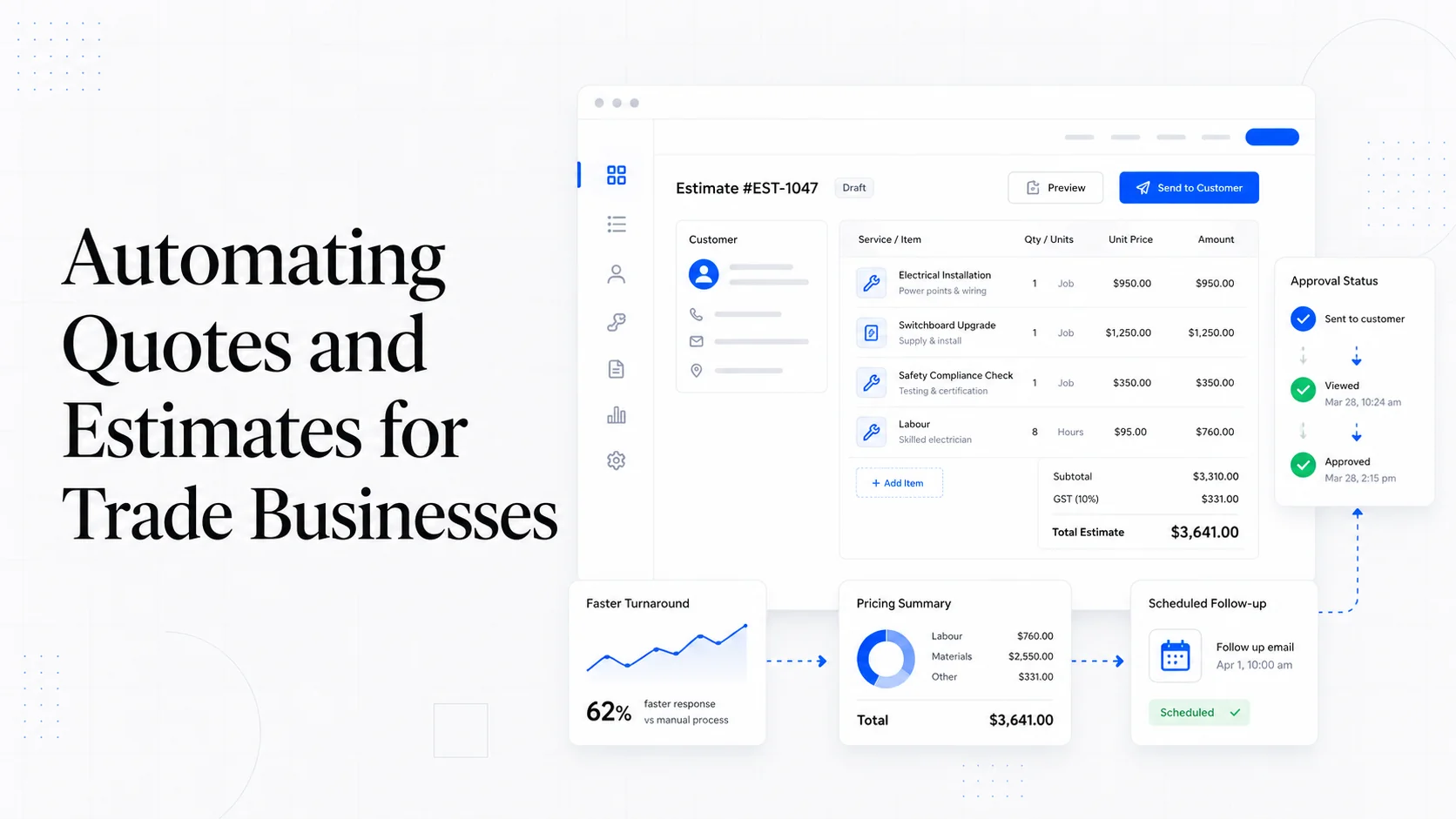
From Contact Form to CRM: The Minimum Lead Pipeline Every Service Business Should Automate
A practical lead pipeline for service businesses: connect forms, calls, email, CRM records, reminders, follow-ups, and reporting so good leads stop disappearing.
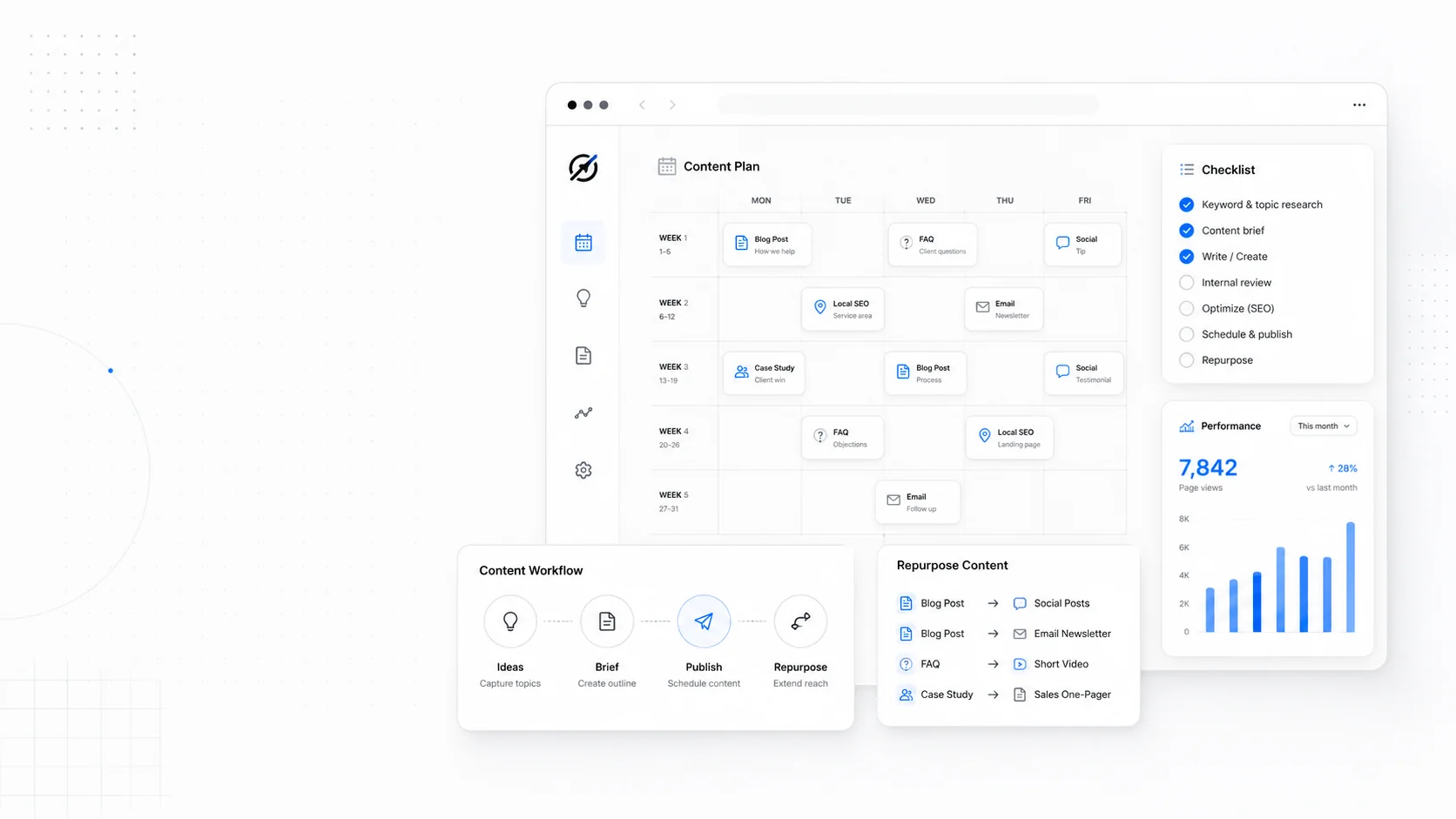
The 2026 Website Content Refresh Playbook: Updating Old Pages Without Breaking SEO
A practical content refresh process for small business websites: how to update stale pages, preserve rankings, improve AI search visibility, and avoid SEO mistakes.
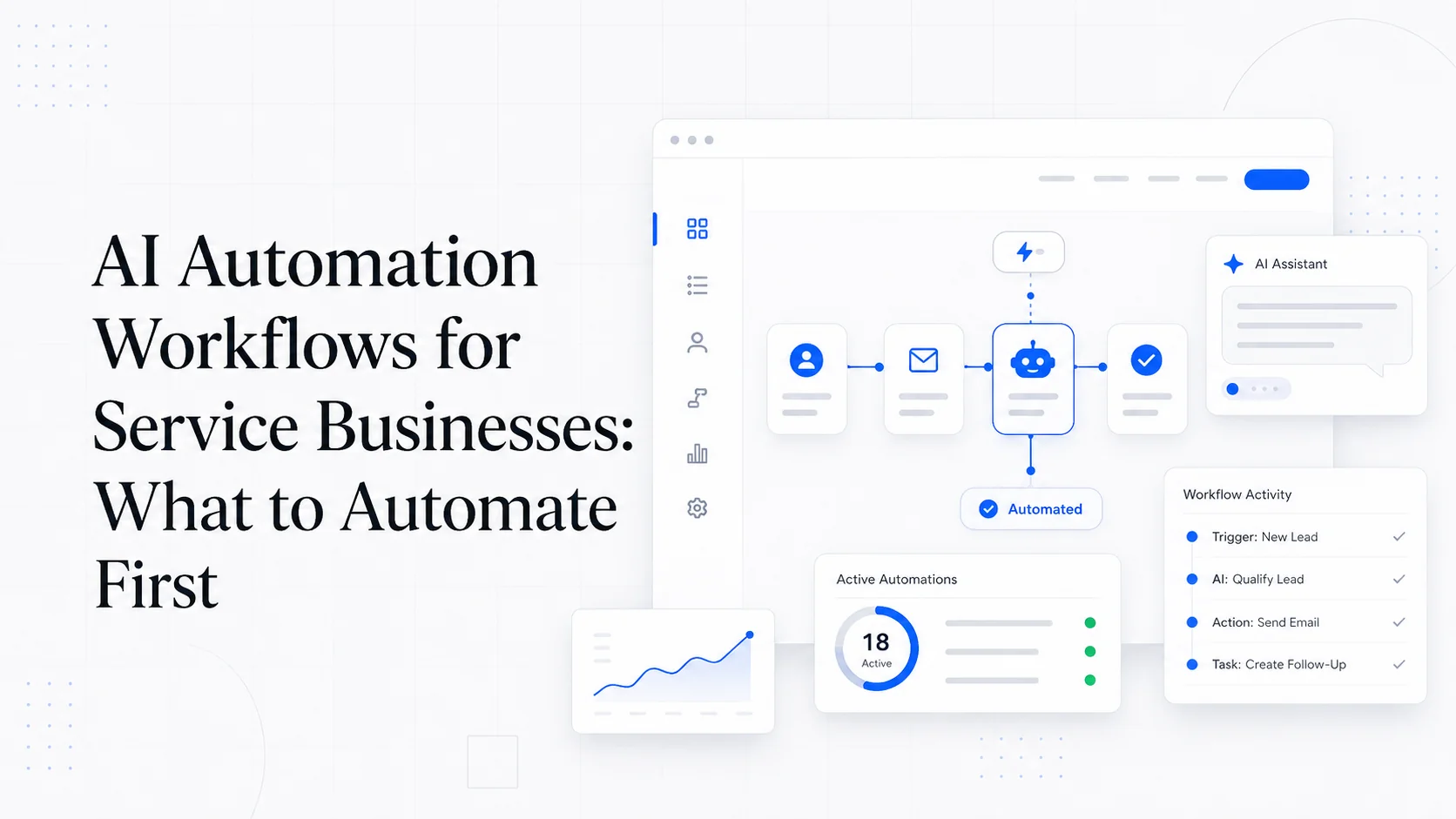
The AI Chat Widget Decision: When It Helps Leads and When It Hurts Trust
AI chat widgets can qualify leads and answer common questions, but they can also slow the site, invent answers, mishandle privacy, and damage trust. Here is how to decide.
Keep reading?
More field notes from building modern websites and software for real businesses.