
Link Building for Local Service Businesses That Actually Works
Honest link building for local service businesses. Local PR, sponsorships, HARO, partnerships, niche directories, and guest posts done the right way.
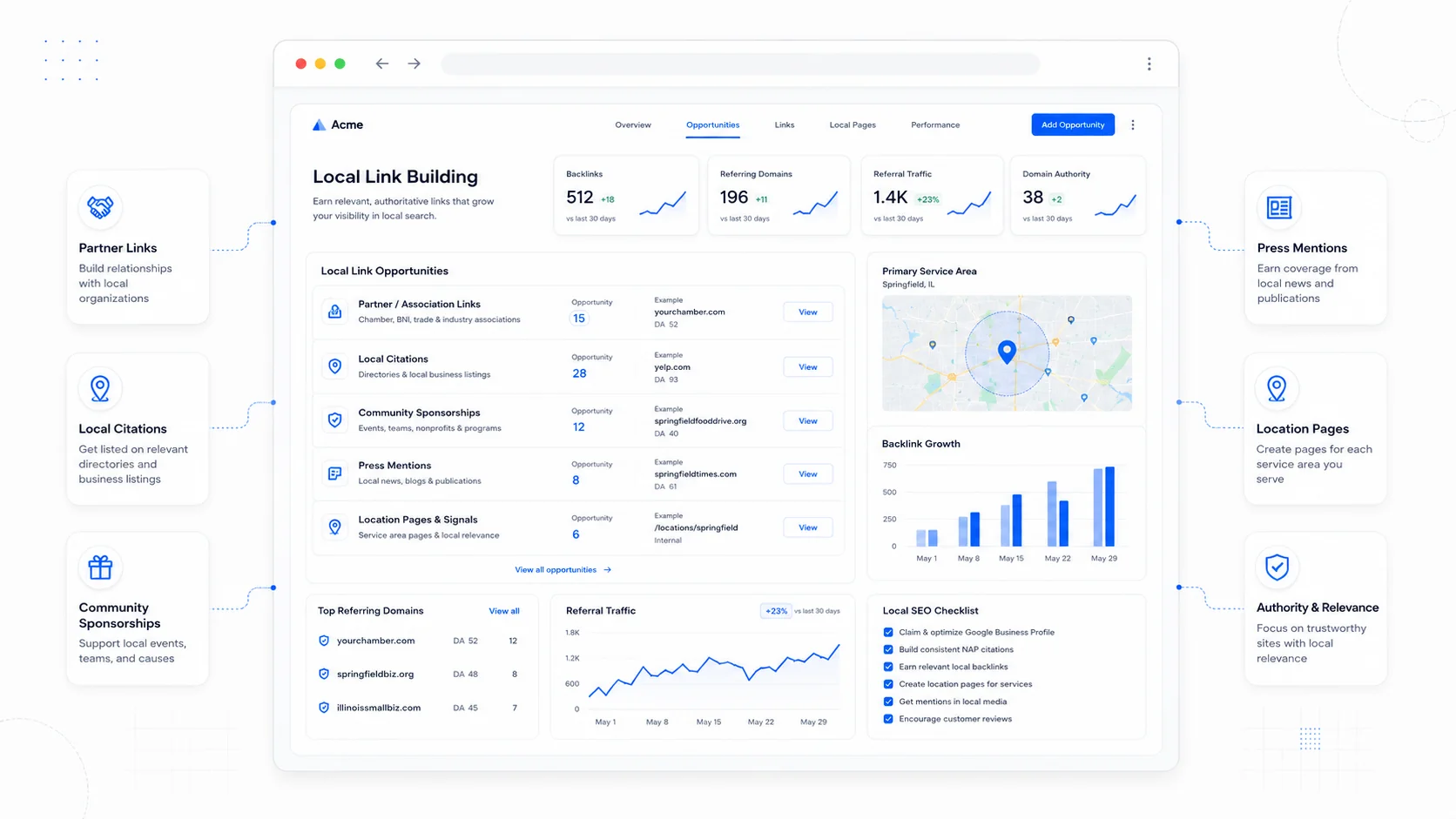
The link-building advice most small businesses run into is written for SaaS startups with content teams and SEO budgets. It assumes you can hire someone to pitch 200 publishers a month, run skyscraper outreach campaigns, and produce viral data studies on demand. None of that is realistic for a plumber, an attorney, a moving company, or a roofer who already runs the business and runs the marketing in spare hours.
The good news: a local service business does not need 500 backlinks to rank. It needs maybe 20 to 50 genuinely good ones, almost all of them locally relevant, earned in ways that do not violate Google's link-spam policies. Done quietly and consistently, that is enough to outrank most competitors in a defined service area for years.
This guide covers the link-building tactics that actually work for local service businesses in 2026, the ones that look attractive but are not worth the time, and the ones that will get you penalised.
Understand Why Links Still Matter (and What Has Changed)
Links are still one of the most important ranking signals Google uses. The Search Quality Evaluator Guidelines make this clear, and every large-scale SEO study from the past decade — including Backlinko's analysis of search ranking factors — finds the same correlation: pages with more relevant, authoritative links rank higher.
What has changed since 2015 is the bar for what counts as a real link:
- Topical and geographic relevance matter more than raw count. One link from your local newspaper is worth more than 50 from generic blog directories.
- Anchor text manipulation is dead. Google's spam systems flag exact-match anchor patterns aggressively. Natural is better.
- Link velocity can trigger algorithmic suppression. Earning 100 links in a month after years of nothing looks like manipulation, because it usually is.
- Links from low-quality sites are increasingly worthless and occasionally toxic. The old "more is more" mindset stopped working a decade ago.
Google's link spam policy is the formal version of what to avoid. The plain-English version: any link you bought, traded, or coerced is at best worthless and at worst harmful.
Start With the Easy Wins You Already Have
Before any outreach, check what you already have. Most small businesses have a dozen potential links sitting around that they never claimed.
The audit:
- Industry associations. If you belong to a trade association, BBB, or local guild, check that they list you with a real link, not a redirect or a tracking URL.
- Suppliers and manufacturers. Many manufacturers maintain "find a certified installer" pages that link to listed dealers. If you sell or install Carrier, Trane, Tesla, Andersen, or any other branded product, see if their dealer locator links to you.
- Past press coverage. If you have ever been quoted, profiled, or mentioned in a local paper, blog, or industry publication, check that the mention links to you. Sometimes a follow-up email gets a missing link added.
- Your own affiliate sites. A separate domain you own (the founder's personal site, a sister business, an old project) can often link cleanly.
- Customer sites. B2B service providers in particular often have customers who would happily list them as a vendor. Ask.
You can find what you already have by running your domain through Ahrefs Webmaster Tools, which is free with verified ownership and shows your full backlink profile. Google Search Console's Links report is less complete but free and reliable.
This audit alone usually surfaces five to ten reclaimable links. That is real progress before you have written a single outreach email.
Local PR: The Most Underused Lever for Local Businesses
Local newspapers, neighborhood blogs, regional industry publications, and local TV station websites publish constantly and need stories. A small business with a real story is genuinely useful to them. The exchange — content for a link — is honest, reciprocal, and exactly what Google wants link building to look like.
The angles that work for service businesses:
- Seasonal expert commentary. A roofer explaining ice dams in January, a plumber talking about frozen pipes during a cold snap, a landscaper on tick prevention in spring. Local outlets cover these every year and need a local source.
- Job creation or hiring milestones. A hiring announcement at a local business is a small-paper story.
- Real customer outcomes (with permission). A restoration company that helped a homeowner after a fire, a moving company that got a family resettled in 24 hours.
- Business milestones. Anniversaries, expansions, new locations.
- Charitable work. Pro bono jobs, donations, volunteer hours. Local outlets cover these heavily.
How to actually pitch:
- Find the reporters who cover your beat. Most local outlets list staff writers with email addresses. LinkedIn is the backup.
- Pitch a single story with a clear angle, in three short paragraphs. Not a press release.
- Offer to be a quoted source on related future stories.
- Follow up once, then move on.
Search Engine Land covers digital PR more deeply if you want frameworks. The shortcut for a small business: identify the five most relevant local publications, build a relationship with one reporter at each over six months, and you will have a sustainable source of local press links for years.
Sponsorships: Cheap, Local, and Often Linked
Sponsoring a local team, charity event, or community organization is one of the most reliable link-building tactics for local service businesses. The link is honest (you paid for the sponsorship, the link is part of the recognition), the page is local, and the cost is usually modest.
The pattern:
- Identify local sponsorship opportunities — youth sports leagues, school fundraisers, charity runs, community festivals, theatre productions.
- Confirm they list sponsors with links on their website. Many do; many do not. Ask before sending money.
- Pick organizations with a credible website (not a free Wix page from 2014).
- Get a logo placement and a link to your service page, not just the homepage.
The cost-per-link math is excellent. A $500 sponsorship of a local Little League team often produces a link that contributes to local rankings for years. It also produces actual community goodwill, which is a separate reason to do it.
Be careful about the "Sponsorship Link" pages that exist purely to sell links — Google distinguishes between authentic community sponsorships and the link-farm kind. A genuine charity, school, or community group passes the test. A site whose entire purpose is "list of sponsors who paid for a link" does not.
HARO and Connectively: Slow but Real
Help A Reporter Out (HARO) was acquired and rebranded as Connectively in 2024, and the model is the same: reporters post requests for sources, qualified people respond, occasional pitches turn into quotes with links.
For a local service business, the response rate is low but the quality of the resulting links is often high — major publications, industry sites, sometimes national media. The investment is 15 minutes a day.
How to make it work:
- Subscribe to the relevant categories (usually Business and Real Estate or whatever fits your trade).
- Filter aggressively. Most queries are not for you. The few that are deserve a real response.
- Respond fast. Reporters often choose the first qualified source.
- Lead with credentials in the first sentence. Then answer the question completely in three to five sentences.
- Provide a real, specific quote — not marketing-speak.
- Include a one-line bio and your URL at the end.
The hit rate is roughly 5–10% for thoughtful responses to relevant queries. A few hits a year produce some of the highest-authority links a small business can earn. Search Engine Journal has a practical HARO/Connectively guide if you want a deeper read on the workflow.
Niche and Local Directories: A Few Worth Listing On
Most directories are worthless. A handful are not. The ones worth your time fall into three buckets.
General authoritative directories:
- Google Business Profile (essential)
- Bing Places
- Apple Business Connect
- Yelp
- Better Business Bureau
Local authority directories:
- Your local Chamber of Commerce
- Your city's economic development site, if it has a business directory
- Your county or regional tourism board, if you serve consumer markets
Industry-specific directories (vary by trade):
- Lawyers: Avvo, Justia, FindLaw, Martindale
- Contractors: Houzz, Angi, HomeAdvisor (paid leads, but the listings link)
- Movers: Better Business Bureau, AMSA member directory
- Medical: Healthgrades, Vitals, Zocdoc
- Restaurants: OpenTable, TripAdvisor
The principles for evaluating any directory:
- Is the directory itself ranked well by Google when you search its name plus the topic?
- Does it have real editorial standards, or does it accept any submission?
- Are the existing listings detailed, or are they auto-generated stubs?
Moz's local SEO learning hub is worth reading on citation strategy. Skip "Top 500 Free SEO Directories" lists. They were never useful and are now actively harmful to your link profile.
Partnerships and Vendor Cross-Links
Service businesses often have natural partners — non-competing businesses that serve the same customer base. A plumber and an HVAC company. A real estate agent and a moving company. A wedding photographer and a venue. These relationships produce some of the most authentic, easiest-to-earn links available.
The pattern:
- Identify three to five non-competing local businesses whose customers overlap with yours.
- Build a real relationship — referrals, joint promotions, shared customer events.
- Offer a "Trusted Partners" or "Recommended Vendors" page on each side, linking to the other.
- Keep the list short and meaningful. A 50-vendor "partners" page is a link farm.
These pages also serve as referral channels independent of SEO, which is the real reason to build them. The link benefit is the SEO bonus to a relationship that should exist anyway.
Guest Posts: The Right Way
Guest posting got a bad reputation in the 2013–2016 era when SEO agencies industrialised it into spam. Done well, it is still a legitimate way to earn relevant links. The line between effective and penalty-bait is mostly about who you write for and how much you actually have to say.
The criteria for a guest post worth pursuing:
- The publication is genuinely read by your target audience or peers in your industry.
- Their existing content has real editorial standards — not a wall of obvious paid posts.
- They do not advertise "guest posting opportunities" with pricing. That is a tell.
- The link they offer is in-context and to a relevant page, not a spammy author bio with five exact-match keywords.
- You have something genuinely useful to say.
Where to look:
- Trade publications in your industry.
- Local business journals.
- Industry association blogs.
- Niche newsletters with a publishing platform.
Ahrefs has a thoughtful guide on guest blogging that covers the modern criteria. The shortcut: if a publication's editorial standards are higher than yours, the link is probably worth pursuing. If they are lower, walk away.
A small business that publishes one or two genuine guest posts a year on credible industry sites is doing better than 95% of competitors who hire a "guest post agency" and pay for placements on PBN-style sites that Google has been disregarding for years.
What Not to Do
Some tactics still circulate in cheap SEO services. They are either ineffective or actively harmful in 2026:
- Buying links. A direct violation of Google's link spam policy. Risk does not match the upside.
- Private Blog Networks (PBNs). Google has been deindexing PBN sites at scale for years. Links from them range from worthless to penalty-triggering.
- Comment spam. Modern blog platforms apply
nofolloworugcto user-submitted links. The links pass nothing. - Forum signature links. Same problem.
- Reciprocal link schemes ("you link to me, I link to you" as a trade). Allowed in moderation between genuine partners, abusable at scale.
- Mass directory submission services. A service that promises 500 directory links for $99 is selling you a future cleanup project.
- Exact-match anchor text manipulation. Google's spam systems are good at detecting this. Vary anchor text naturally — most of your links should anchor on your brand name, the URL, or descriptive phrases.
If a vendor pitches you "guaranteed first-page rankings" or "1000 backlinks for $200," delete the email. The downside risk on the wrong link-building tactics is genuine, especially since the Google spam updates of 2024 and 2025 hit manipulated link profiles hard.
Track What You Actually Earn
A small business does not need an enterprise link-tracking stack. You need a spreadsheet and the free tools.
Track:
- The URL of the linking page.
- The anchor text used.
- The date the link appeared.
- Whether the link is
dofollowornofollow. - The Domain Rating or Domain Authority of the linking domain (Ahrefs Webmaster Tools or Moz Link Explorer give free estimates).
- Notes on how the link was earned.
Review monthly. The pattern that emerges over a year is more useful than any individual link. You will see which tactics are producing real results and which ones are eating time without payoff.
A Realistic 12-Month Plan
If you want a sequence that produces 20–30 quality links over a year without consuming weekends, the cadence looks like this:
- Month 1: Audit existing links. Reclaim the obvious missing ones.
- Month 2: Submit to the relevant authoritative directories. Update Chamber of Commerce, BBB, industry associations.
- Month 3: Identify three to five local sponsorship opportunities. Commit to one or two.
- Months 4–6: Build relationships with three local journalists. Send one cold pitch each.
- Months 6–9: Subscribe to Connectively. Respond to two relevant queries per week.
- Months 9–12: Identify two industry publications. Pitch one quality guest post each.
- Throughout: Build vendor partnerships organically. Add cross-links where it makes sense.
That cadence produces a clean, defensible link profile that compounds for years. It will not look impressive in a single month. It will look meaningful at the end of year one and substantial at the end of year two.
The local service businesses that consistently rank in their service areas almost always have link profiles that look like this — small, local, and honestly earned. The ones that fall off the rankings usually have profiles that look bought.
If you would rather not run the link-building work yourself, contact us for a conversation about whether it makes sense as part of a broader SEO program. Most of the work above is straightforward but slow, and we generally recommend pairing it with the SEO-focused website builds and content programs that produce something worth linking to in the first place. The single most reliable way to earn links is to deserve them.
More posts from the blog.
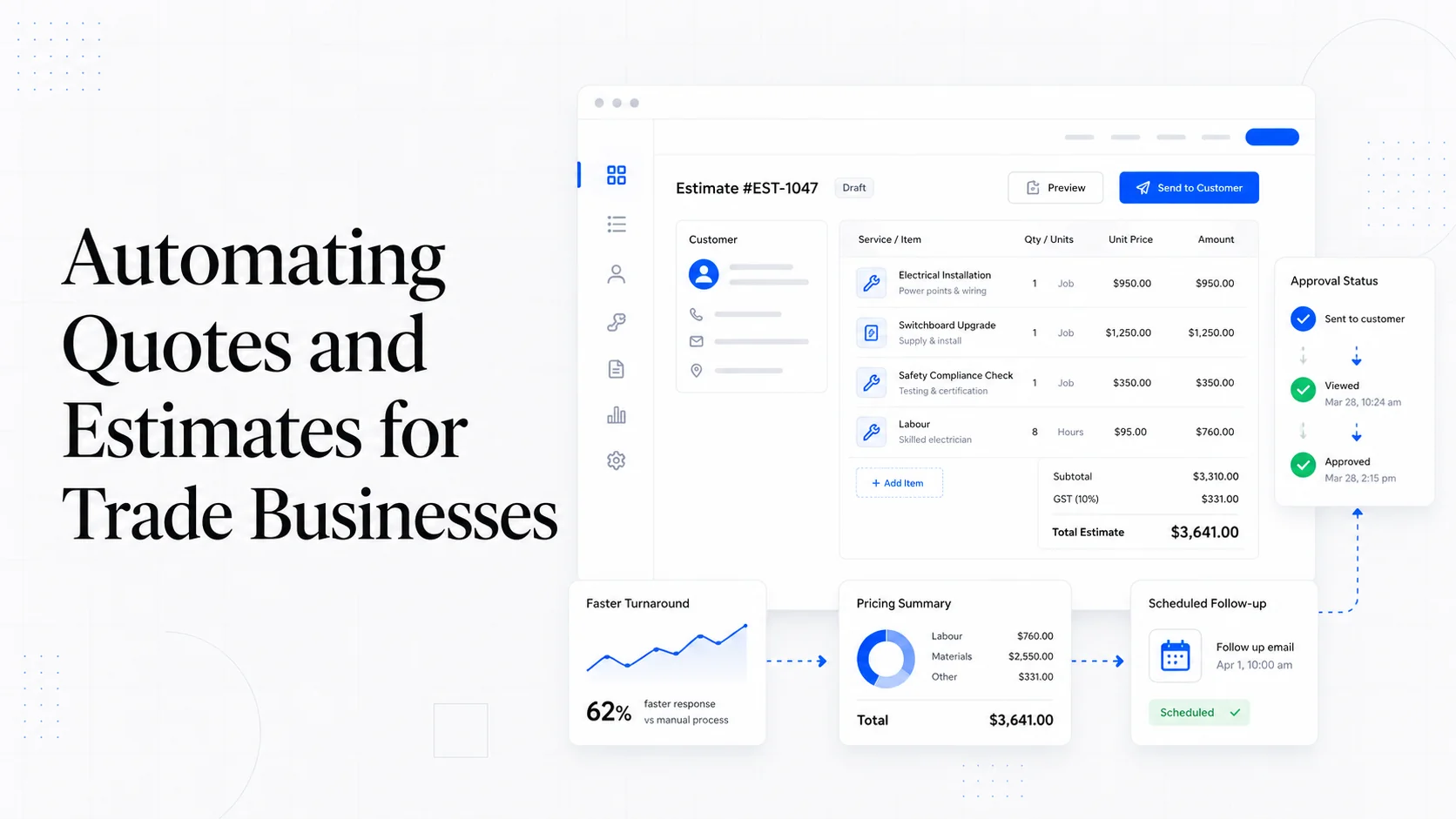
From Contact Form to CRM: The Minimum Lead Pipeline Every Service Business Should Automate
A practical lead pipeline for service businesses: connect forms, calls, email, CRM records, reminders, follow-ups, and reporting so good leads stop disappearing.
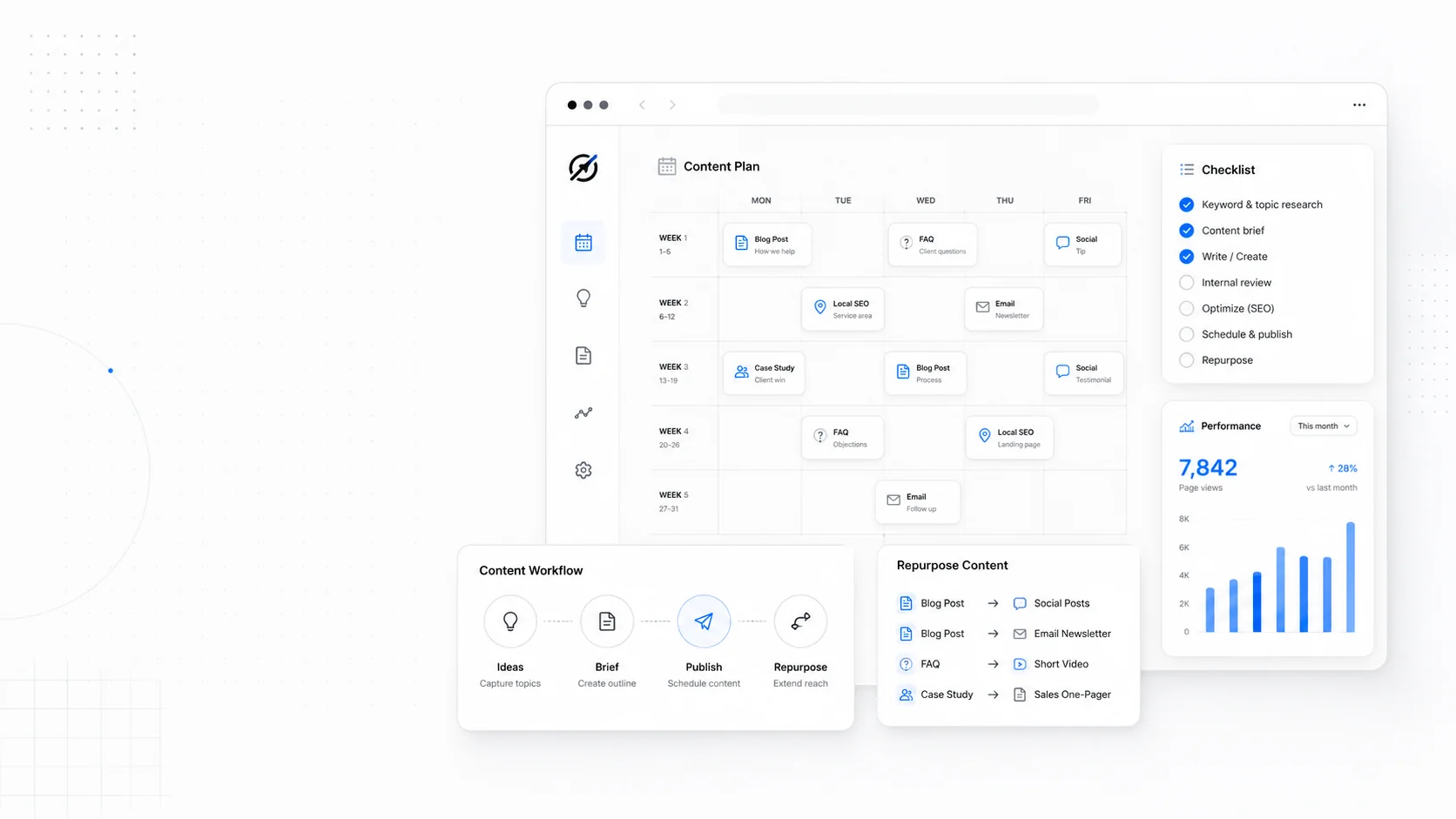
The 2026 Website Content Refresh Playbook: Updating Old Pages Without Breaking SEO
A practical content refresh process for small business websites: how to update stale pages, preserve rankings, improve AI search visibility, and avoid SEO mistakes.
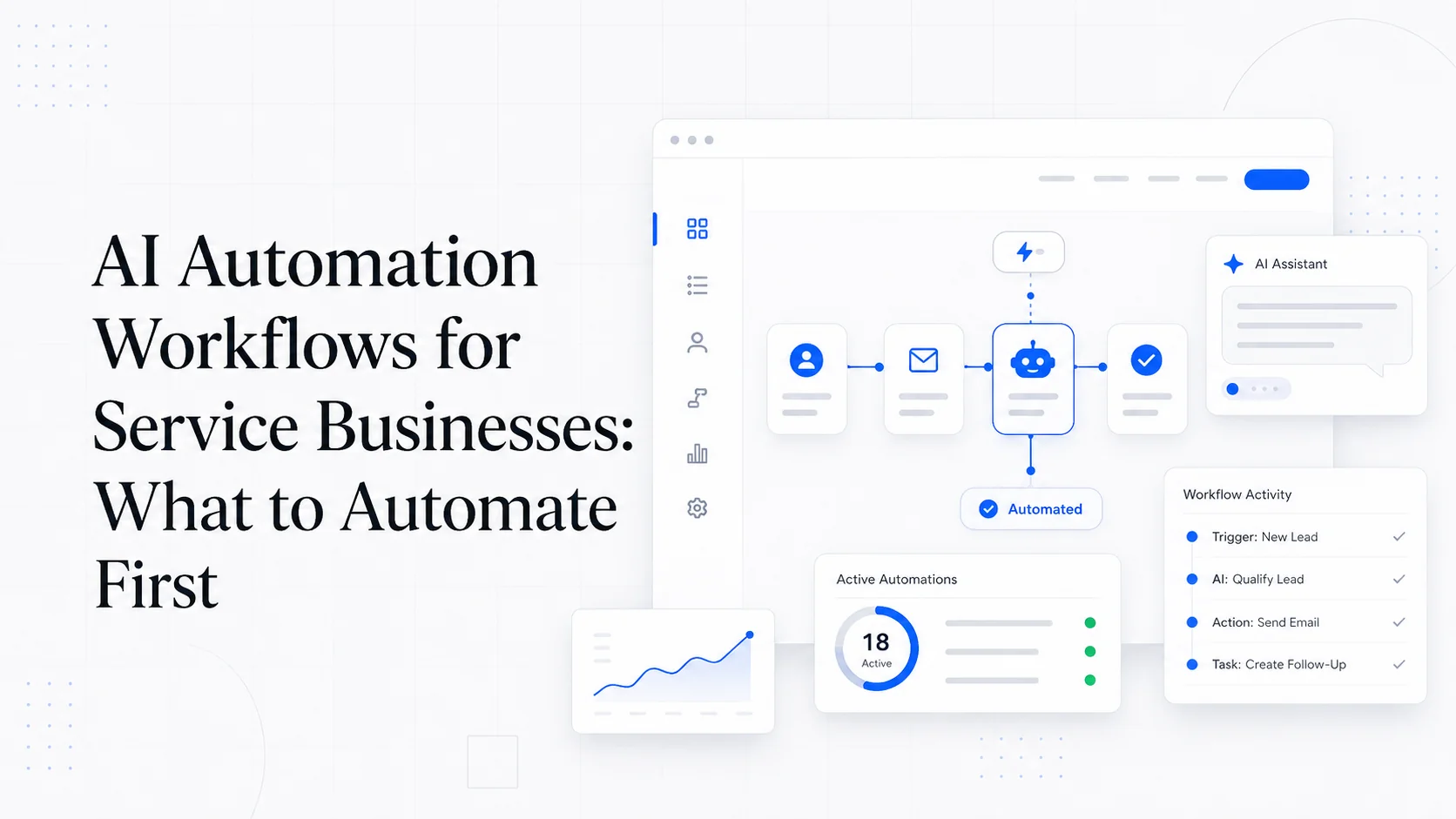
The AI Chat Widget Decision: When It Helps Leads and When It Hurts Trust
AI chat widgets can qualify leads and answer common questions, but they can also slow the site, invent answers, mishandle privacy, and damage trust. Here is how to decide.
Keep reading?
More field notes from building modern websites and software for real businesses.