
Automating Quotes and Estimates for Trade Businesses
Structured pricing data, configurator UX, PDF generation, e-signature, and CRM/Stripe integration — how trade businesses turn quotes into closed jobs faster.
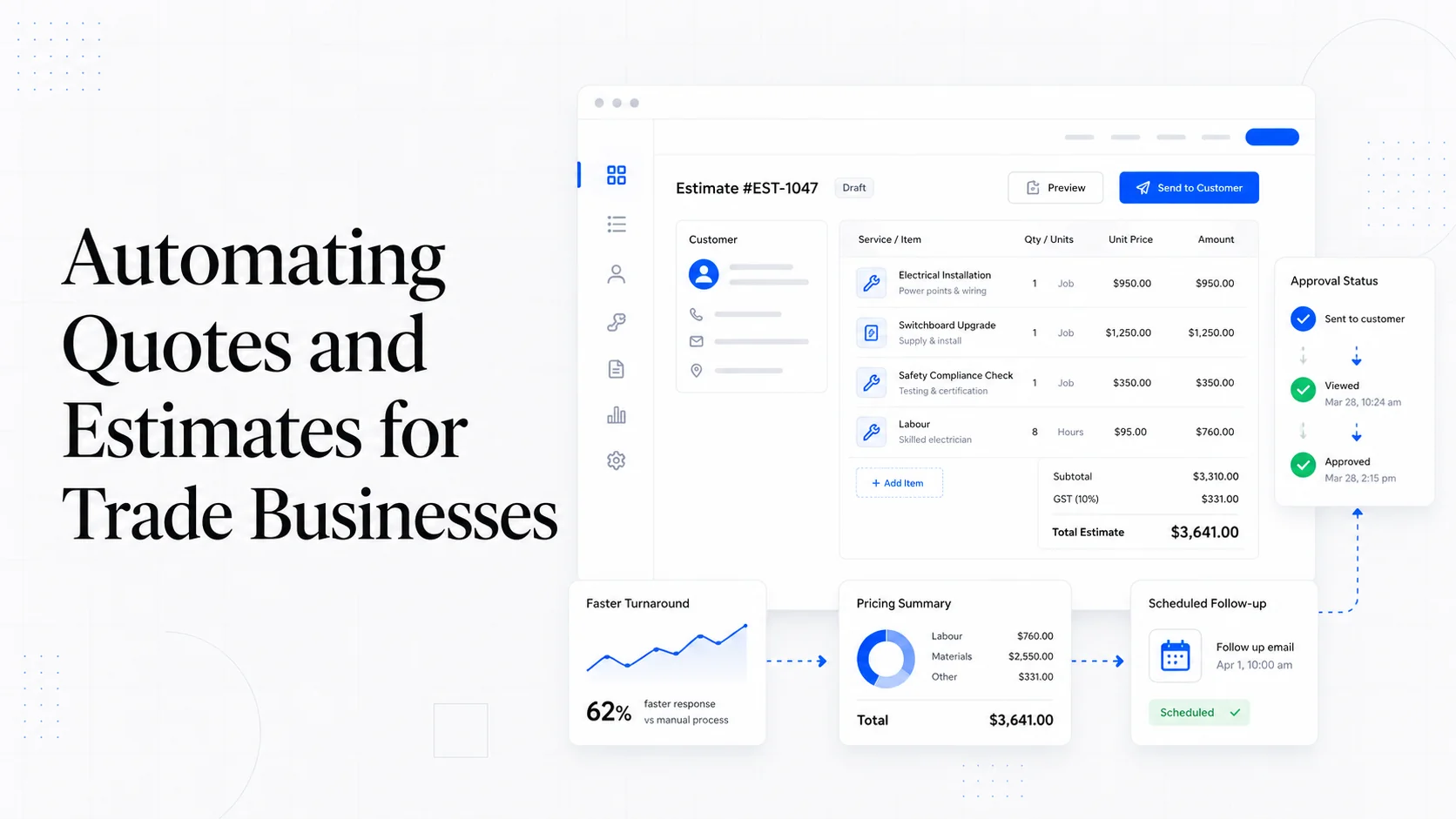
A trade business lives or dies on quote turnaround. The owner who can walk a job, send a clean estimate the same evening, and follow up two days later wins more work than the one who batches quotes on Sunday night. The math is not subtle: faster quotes correlate strongly with higher close rates, because most homeowners and facility managers buy from whoever responds first with a believable number.
The blocker is almost never sales skill. It is the manual labor of building each quote — flipping through a price book, recalculating margins, copying line items from the last similar job, exporting to PDF, attaching to email, then chasing the signature. The tools exist to automate every step of this, but most trades shops bolt together half a solution and live with the gaps. Done well, an automated quoting system trims hours off the owner's week and lifts close rates by 10–20 percent in the first quarter.
This post is a practical breakdown of what to automate, in what order, and which tools handle which parts.
Start With Structured Pricing Data
The single biggest mistake in quote automation is treating the price list as a Word document. If your prices live in a PDF, a spreadsheet column with merged cells, or only in the owner's head, no software will save you. The first job is to get pricing into a structured format a system can use.
A useful pricing structure has, at minimum:
- A unique identifier for each service or material.
- A category (so you can group them in the configurator).
- A base unit (each, linear foot, square meter, hour).
- A unit cost and a unit sell price.
- A markup or margin field.
- An effective-from and effective-to date.
- Optional region or branch overrides.
- Optional bundle membership (this item is part of "standard kitchen package").
This is pure database work. A simple Postgres schema with a services, materials, and bundles table is enough for most businesses to start. If you are not comfortable with raw SQL, Supabase gives you a usable admin UI on top of Postgres without giving up the structured data model.
Once the price list is structured, every downstream step becomes possible: configurators, instant quotes, scheduled price increases, regional overrides, bundle discounts, and clean reporting. Without it, you are forever editing PDFs by hand.
The Configurator: Where the Quote Gets Built
A quote configurator is the screen the salesperson or estimator uses to build the actual estimate. Done right, it should feel less like data entry and more like clicking through a menu.
The non-negotiable features:
- Search and filter the price list as you type.
- Add line items with quantity, dimensions, and notes.
- Auto-calculate subtotal, tax, and totals.
- Apply discounts (percentage or flat) with audit trail.
- Show margin in real time so estimators do not undercut profit.
- Save partial quotes so the estimator can finish in the office.
- Templates for common job types (full bathroom remodel, deck refinishing, HVAC swap).
For trades that do field estimates, the configurator has to work on a phone or tablet without a perfect signal. That means progressive web app patterns — service workers, offline-first storage with IndexedDB, and queued sync when the connection comes back. The Workbox library from Google is still the cleanest way to build this without writing every cache strategy from scratch.
For higher-end residential or commercial work, a customer-facing configurator on the website itself can replace the first sales call. We have built these for businesses where the configurator generates a starting estimate, captures the lead, and books the in-person measurement in one flow. That is essentially conversion-focused design applied to quoting — the same logic we use across our conversion-focused design work.
PDF Generation That Doesn't Look Like a Form Letter
Once the quote is built, it has to land in the customer's inbox as a clean PDF. This is the part most automation tools get wrong — they produce something that looks like an internal report rather than a proposal.
The reliable patterns:
- Use a templating engine that supports your brand (HTML to PDF via Puppeteer or Playwright, or libraries like WeasyPrint).
- Render line items in a clean table with grouping by category.
- Include a one-page summary first, with detailed breakdown after.
- Show photos from the site visit inline.
- Include scope language that protects margin (what is included, what is not).
- Embed the e-signature link, payment terms, and validity period.
- Brand it to match the website. The PDF is part of the brand, not an afterthought.
For most builds, server-side HTML-to-PDF rendering is the simplest path. Tools like PDFKit or pdf-lib work for simpler needs, but a templated HTML approach scales better when sales wants to redesign the proposal next quarter.
If your business sends 50+ quotes per week, generate the PDF in a background job and email it once it is ready, rather than blocking the user. BullMQ, Inngest, or a simple Vercel cron trigger all work depending on the stack.
E-Signature Without the Friction
Asking customers to print, sign, scan, and email back is dead. Asking them to log into a third-party signing platform with a captcha is almost as bad. The best signature flows feel like clicking "I agree" — but with the legal weight of a signed document.
The reliable APIs:
- DocuSign eSignature REST API — gold standard, expensive at scale.
- Dropbox Sign (formerly HelloSign) API — cleaner pricing, solid API, used by many trades.
- PandaDoc API — strong for proposals where the document is also the signature surface.
- Native Stripe-integrated signing for payment-coupled agreements.
For US e-signatures, both ESIGN Act and UETA make electronic signatures legally binding when intent and consent are properly captured. The NIST guidance on electronic signatures and the eIDAS regulation for European customers are the right primary references if you have to defend the process in a dispute.
The signed PDF, the audit trail, and the signature event should all flow back into the same database row as the quote itself. Otherwise, you cannot answer "did this customer sign?" without a search across three systems.
Hooking Into the CRM and Stripe
A quote is useless if the data dies inside the quoting tool. The integrations that actually move the needle:
CRM sync. When a quote is sent, the customer record updates with the quote amount, status, and follow-up date. When the quote is signed, the deal moves to "won" and a project is created automatically. This works with HubSpot's API, Pipedrive's API, or a custom CRM built on Postgres. The point is: no one should be retyping anything.
Stripe for deposits. As soon as a quote is signed, send the deposit invoice. Stripe Invoicing handles the automatic email, hosted payment page, and reminders. For larger jobs, use Stripe Payment Links or generate a Payment Intent tied to the specific quote. The customer pays the deposit on a phone in 30 seconds, and the project starts. We covered this in detail in the post on Stripe integrations for service businesses.
Calendar sync. Once the deposit clears, automatically book the kickoff or measurement call via Google Calendar API or Microsoft Graph.
Accounting handoff. The signed quote and paid deposit should appear in QuickBooks or Xero without bookkeeper intervention. Both have well-documented REST APIs.
When all four are wired together, a signed quote triggers eight things automatically. The trade owner just sees a notification: "Quote signed, deposit paid, kickoff booked Tuesday."
Off-the-Shelf vs Custom
Many trades start with Jobber, ServiceTitan, or Housecall Pro and they are excellent for the standard cases. The configurator is decent, the PDF looks fine, the payment flow works.
Custom becomes worth it when:
- Pricing has unusual rules (regional, seasonal, multi-tier discounts, contract pricing for commercial accounts).
- The configurator needs to model dimensions, materials, and labor in ways generic tools cannot.
- The business has 20+ estimators and seat licenses get expensive.
- You need the data flowing into a custom dashboard or reporting layer.
- The brand requires a specific customer-facing experience.
The hybrid path — keep ServiceTitan for the field service side, build a custom front-end configurator and proposal generator for high-value jobs — is the most common pattern we ship for established trades shops.
Measuring Whether It's Working
The metrics that matter, tracked monthly:
- Average time from site visit to quote sent.
- Average time from quote sent to signed.
- Close rate by job type and salesperson.
- Average margin by job type.
- Number of follow-ups before close (lower is better).
- Percentage of quotes paid deposit within 48 hours of signing.
If quote-to-sent time drops from 36 hours to 4 hours and close rate ticks up even 5 points, the system is paying for itself. If it does not move, either the pricing is wrong or the follow-up is broken — software cannot fix either.
Action Items
- Audit your current price list. If it is not in a structured database or spreadsheet with consistent fields, fix that before automating anything.
- Time your current quote process end to end on three real jobs. Write down where the hours actually go.
- Pick one bottleneck — usually PDF generation or e-signature — and automate it first. Do not try to do everything at once.
- Wire Stripe deposits into the signed-quote event. This single change pulls revenue forward by days or weeks.
- Build dashboards for the six metrics above so you know whether the system is helping or just looking impressive.
Sites That Grow builds custom software for trade businesses that have outgrown off-the-shelf quoting tools. If your estimators are still rebuilding the same proposal from scratch every week, we should talk.
More posts from the blog.
From Contact Form to CRM: The Minimum Lead Pipeline Every Service Business Should Automate
A practical lead pipeline for service businesses: connect forms, calls, email, CRM records, reminders, follow-ups, and reporting so good leads stop disappearing.
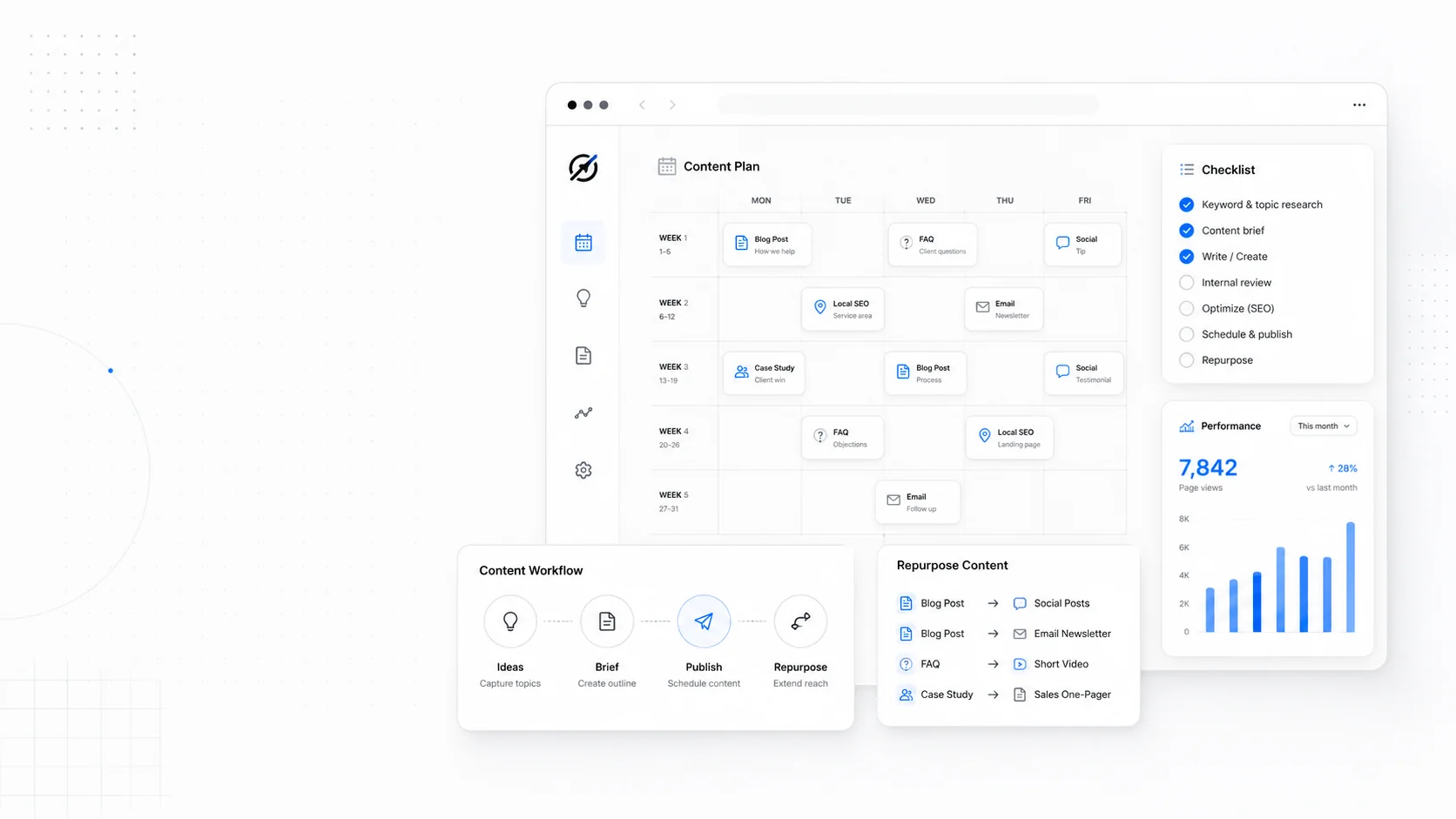
The 2026 Website Content Refresh Playbook: Updating Old Pages Without Breaking SEO
A practical content refresh process for small business websites: how to update stale pages, preserve rankings, improve AI search visibility, and avoid SEO mistakes.
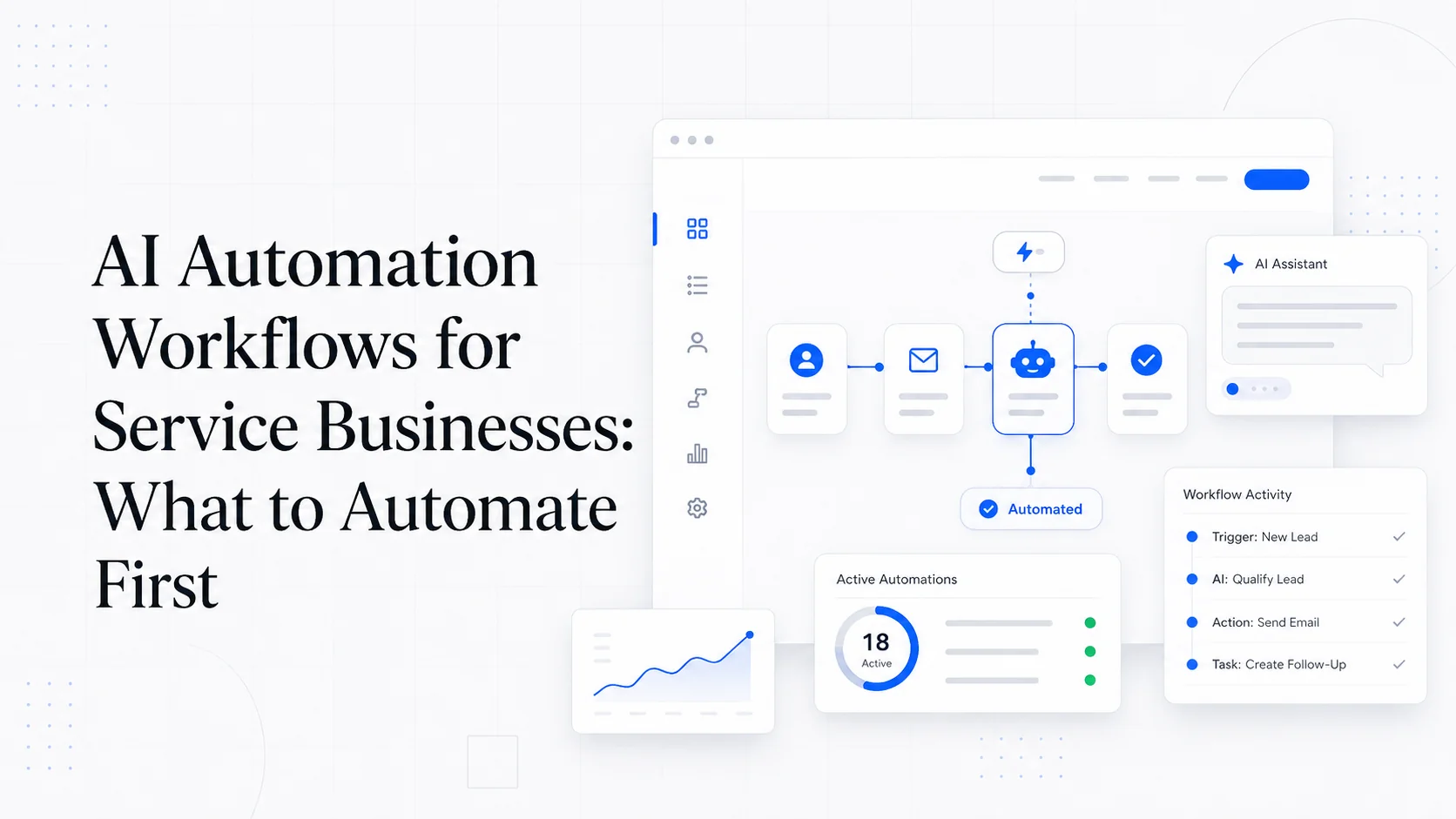
The AI Chat Widget Decision: When It Helps Leads and When It Hurts Trust
AI chat widgets can qualify leads and answer common questions, but they can also slow the site, invent answers, mishandle privacy, and damage trust. Here is how to decide.
Keep reading?
More field notes from building modern websites and software for real businesses.